SAFETY

What were the HIMALAYA
trial results for
safety
in patients with
unresectable HCC?

The safety of IMFINZI® (durvalumab) + IMJUDO® (tremelimumab-actl) was evaluated in a total of 388 patients in HIMALAYA, a randomized, open-label, multicenter study.1,2 See the full safety and tolerability results for the IMFINZI + IMJUDO Regimen for unresectable hepatocellular carcinoma treatment below.

Adverse Reactions

What common adverse reactions were observed in the HIMALAYA trial?

ADVERSE REACTIONS OCCURRING IN 10% OF PATIENTS
TREATED WITH IMFINZI + IMJUDO IN THE HIMALAYA STUDY1,2

Table showing adverse reactions occurring in at least 10% of patients treated with IMFINZI + IMJUDO in the HIMALAYA study

*Represents a composite of multiple related terms.

  • At the primary analysis, serious ARs occurred in 41% of patients who received IMFINZI + IMJUDO. Serious ARs occurring in >1% of patients included hemorrhage (6%), diarrhea (4%), sepsis (2.1%), pneumonia (2.1%), rash (1.5%), vomiting (1.3%), acute kidney injury (1.3%), and anemia (1.3%). At the 6-year post-hoc analysis, serious ARs occurred in 42% of patients who received IMFINZI + IMJUDO, and no new serious treatment-related safety events were reported1-3
  • Fatal ARs occurred in 8% of patients who received IMFINZI + IMJUDO, including death (1%), hemorrhage intracranial (0.5%), cardiac arrest (0.5%), pneumonitis (0.5%), hepatic failure (0.5%), and immune-mediated hepatitis (0.5%)1,2
  • Permanent discontinuation due to ARs occurred in 14% of patients receiving IMFINZI + IMJUDO. The most common ARs leading to discontinuation (in ≥1% of patients) were hemorrhage (1.8%), diarrhea (1.5%), AST increased (1%), and hepatitis (1%)1,2
    • 14% of patients discontinued IMFINZI + IMJUDO and 17% discontinued
      sorafenib due to adverse events4
  • Dosage interruptions or delay of the treatment regimen due to an AR occurred in 35% of patients. ARs which required dosage interruption or delay in ≥1% of patients included ALT increased (3.6%), diarrhea (3.6%), rash (3.6%), amylase increased (3.4%), AST increased (3.1%), lipase increased (2.8%), pneumonia (1.5%), hepatitis (1.5%), pyrexia (1.5%), anemia (1.3%), thrombocytopenia (1%), hyperthyroidism (1%), pneumonitis (1%), and blood creatinine increased (1%)1,2

Grade 3 or 4 treatment-related adverse events occurred in 26% of patients treated with IMFINZI + IMJUDO and 37% of patients treated with sorafenib4

What were the hemorrhage SMQ treatment-related adverse events in the HIMALAYA trial?

Hemorrhage SMQ Treatment-Related Adverse Events Reported in >1 Patient in the Safety Analysis Population of the HIMALAYA Study4
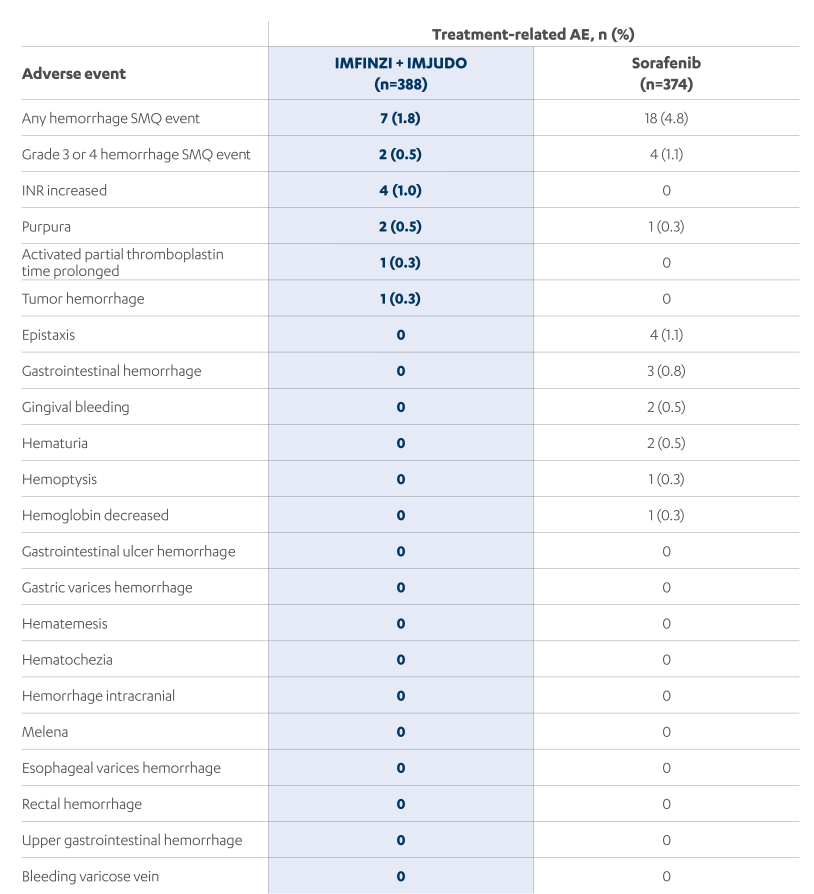
Table showing hemorrhage SMQ TRAEs reported in at least 1 patient in the safety analysis population of the HIMALAYA study
HIMALAYA Regimen Post-hoc OS Analysis
 

SCROLL

In the HIMALAYA study, no patients in the IMFINZI + IMJUDO arm experienced treatment-related hemorrhage of gastroesophageal varices4
Liver Function

What were the mean liver function data over time in the HIMALAYA trial?

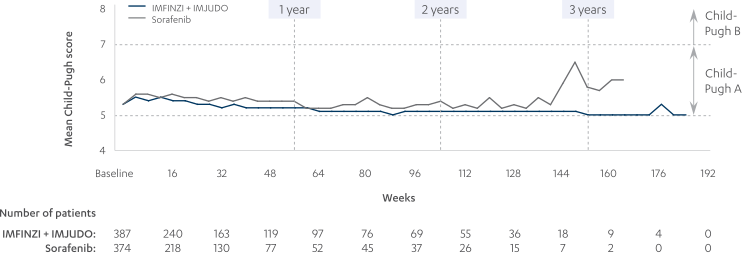
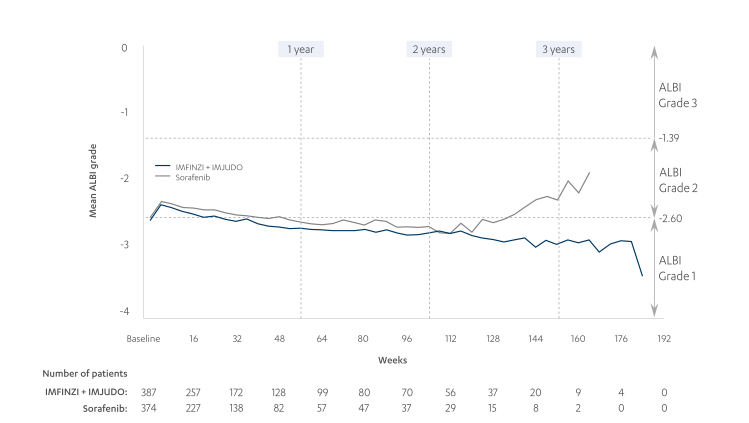
The ONLY dual-IO therapy in uHCC with 3+ years of both Child-Pugh and ALBI data1,2,5,6*

An exploratory analysis evaluated Child-Pugh A scores and ALBI grades at baseline and over time for IMFINZI + IMJUDO and sorafenib in the HIMALAYA study; not powered for statistical significance6

MEAN CHILD-PUGH SCORES OVER TIME6

HIMALAYA Regimen Mean Child-Pugh Scores Over Time
 

SCROLL

Refer to Vogel A, et al. 2022.

MEAN ALBI GRADES OVER TIME6

HIMALAYA Regimen Mean ALBI Grades Over Time
 

SCROLL

Refer to Vogel A, et al. 2022.

  • The HIMALAYA study enrolled a majority of patients with uHCC who were classified as Child-Pugh A4
  • Evaluate clinical chemistries including liver enzymes, creatinine, ACTH level, and thyroid function at baseline and before each dose. In cases of suspected immune-mediated adverse events, initiate appropriate workup to exclude alternative etiologies, including infection. Institute medical management promptly, including specialty consultation as appropriate. Withhold or permanently discontinue IMFINZI and IMJUDO depending on severity1,2

*Values based on mean Child-Pugh scores and ALBI grades at weekly analysis visits over 3.5 years of treatment. ALBI grade calculated as: log10(bilirubin) × 0.66 − albumin × 0.085.6

Immune-mediated Adverse Reactions

What immune-mediated adverse reactions (imARs) were seen with IMFINZI + IMJUDO in the HIMALAYA study?

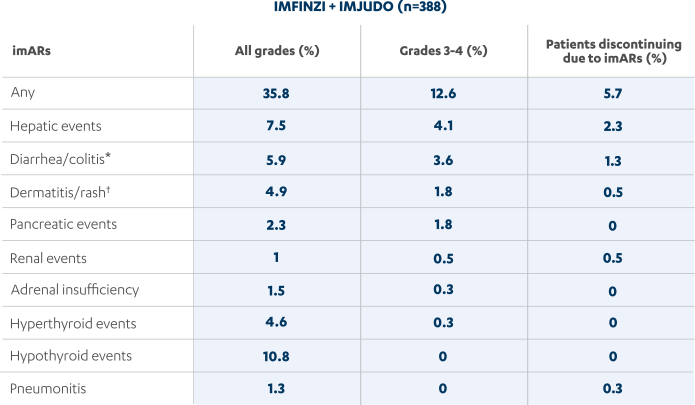
IMMUNE-MEDIATED ADVERSE REACTIONS OBSERVED
WITH IMFINZI + IMJUDO IN THE HIMALAYA STUDY4,7

Table showing imARs observed with IMFINZI + IMJUDO in the HIMALAYA study
 

SCROLL


Includes adverse events with onset or increase in severity on or after the date of first dose through 90 days following the date of the last dose or the date of initiation of the first subsequent therapy. Patients may have had >1 event. Events include those that occurred in ≥1% of patients in either treatment arm.

*Immune-mediated diarrhea/colitis was reported as a grouped term within the HIMALAYA study.

Immune-mediated dermatitis/rash was reported as a grouped term within the HIMALAYA study.

  • Treatment-emergent fatal imARs occurred in 6 patients (1.5%) treated with IMFINZI + IMJUDO4
  • 20.1% of patients treated with IMFINZI + IMJUDO required corticosteroids dosed at ≥40 mg prednisone or equivalent per day for imAR management4
  • 5.7% of patients treated with IMFINZI + IMJUDO discontinued due to imARs4

The majority of imARs with IMFINZI + IMJUDO were Grade 1 or 24,8

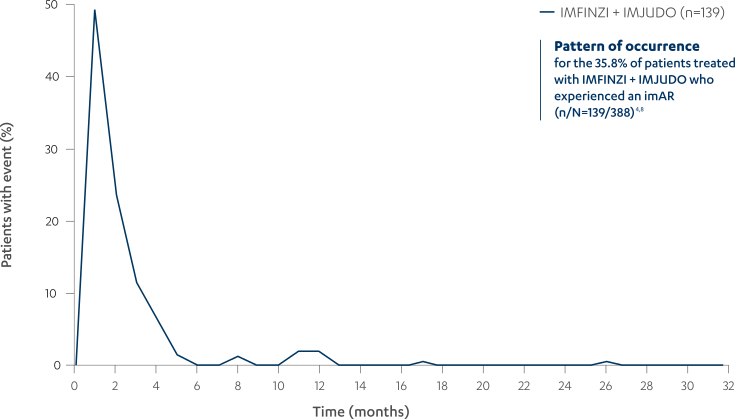
Timing of imARs experienced with IMFINZI + IMJUDO in the HIMALAYA study (exploratory analysis)

In the HIMALAYA study, most imARs occurred within the first 3 months of treatment (exploratory analysis)8

OVERALL FREQUENCY OF ANY imAR BY TIME IN PATIENTS WITH AN imAR (n/N=139/388)8‡

Chart showing the overall frequency of any imAR by time
Table showing imARs observed with IMFINZI + IMJUDO in the HIMALAYA study
 

SCROLL

The percentage of patients with a reaction is the number of patients who experienced ≥1 imAR at each time interval divided by the number of patients who experienced ≥1 imAR at any time; includes first imARs only, regardless of grade.

  • This exploratory analysis assessed temporal patterns of imARs in patients with uHCC treated with IMFINZI + IMJUDO in the HIMALAYA study (n=388). Data cutoff: August 27, 20218
  • Median total duration of IMFINZI treatment was 5.5 months (range: 0.4-42.7) for IMFINZI + IMJUDO (n=388)4

imARs, which may be severe or fatal, can occur in any organ system or tissue. imARs can occur at any time after starting treatment or after discontinuation1,2

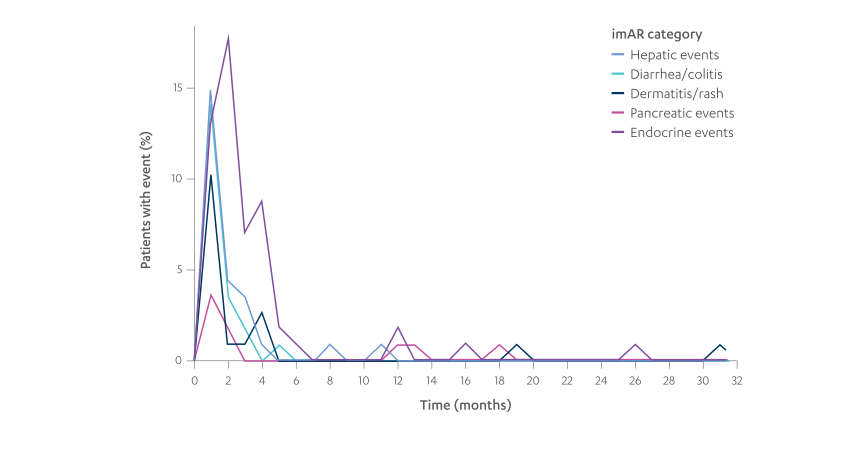
MOST COMMON imARS BY TIME IN PATIENTS WITH AN imAR

Chart showing the most common imARs by time per category
 

SCROLL

§The percentage of patients with a reaction is the number of patients who experienced ≥1 imAR at each time interval divided by the number of patients who experienced ≥1 imAR at any time; includes the first imARs only, regardless of grade.

  • Most common imARs shown include those that occurred in 2% of patients in the IMFINZI + IMJUDO treatment arm7,8
  • The most common imARs observed with IMFINZI + IMJUDO in the HIMALAYA study (all grades) were hepatic events (7.5%), diarrhea/colitis (5.9%), dermatitis/rash (4.9%), pancreatic events (2.3%), adrenal insufficiency (1.5%), hyperthyroid events (4.6%), hypothyroid events (10.8%), pneumonitis (1.3%), and renal events (1%)7
  • imARs, which may be severe or fatal, can occur in any organ system or tissue, including the following: Immune-mediated pneumonitis, immune-mediated colitis, immune-mediated hepatitis, immune-mediated endocrinopathies, immune-mediated dermatologic adverse reactions, immune-mediated nephritis and renal dysfunction, solid organ transplant rejection, and immune-mediated pancreatitis1,2
Laboratory Abnormalities

What common lab abnormalities were observed in the HIMALAYA study?

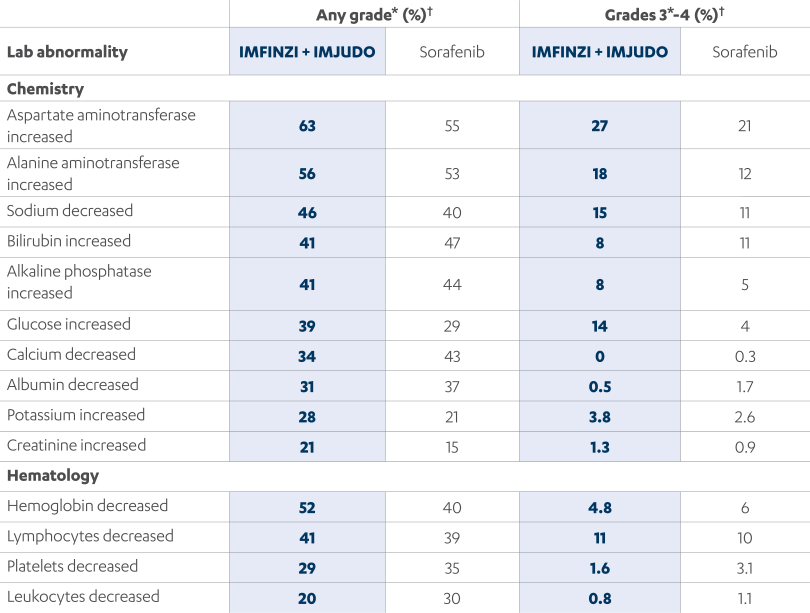
LAB ABNORMALITIES WORSENING FROM BASELINE OCCURRING IN ≥20% OF PATIENTS TREATED WITH IMFINZI + IMJUDO IN THE HIMALAYA STUDY1,2

Table showing lab abnormalities in more than 20% of patients treated with IMFINZI + IMJUDO in the HIMALAYA study
 

SCROLL

*Graded according to NCI CTCAE version 4.03.

Each test incidence is based on the number of patients who had both baseline and at least 1 on-study laboratory measurement available: IMFINZI + IMJUDO (range: 367-378) and sorafenib (range: 344-352).

Key points

SAFETY

In the HIMALAYA study:

  • At the primary analysis, serious ARs occurred in 41% of patients who received IMFINZI + IMJUDO1,2

    • No new serious treatment-related safety events were reported at the ~6-year post-hoc analysis3

  • Fatal ARs occurred in 8% of patients who received IMFINZI + IMJUDO1,2

  • The most common ARs (≥20% of patients) were rash, diarrhea, fatigue, pruritus, musculoskeletal pain, and abdominal pain1,2

  • 14% of patients discontinued IMFINZI + IMJUDO and 17% discontinued sorafenib due to adverse events4

  • Dosage interruptions or delay of the treatment regimen due to an AR occurred in 35% of patients1,2