
Assessments in the HIMALAYA study
- Results should be interpreted based on the open-label study design and were not tested for statistical significance1,2
- EORTC QLQ-C30 is an integrated questionnaire for assessing HRQoL of cancer patients participating in clinical trials using a scale of 0 to 100, with high scores representing high or healthy levels of functioning/high QoL2
- TTD in GHS/QoL was defined as time from randomization to first clinically meaningful deterioration (decrease from baseline of ≥10 points) confirmed at a subsequent visit or death2
- PROs were assessed in a subset of the full analysis set with patients who had baseline scores ≥10 for GHS/QoL, physical functioning, and role functioning, or ≤90 for symptoms2
- Compliance rates for PROs were >77% at baseline and >72% overall across all treatment arms of the study2
- Compliance rate was defined as the proportion of total patients with an evaluable baseline questionnaire and at least 1 evaluable follow-up questionnaire2
TIME TO DETERIORATION IN GHS/QoL WITH IMFINZI + IMJUDO AND SORAFENIB (secondary endpoint)2
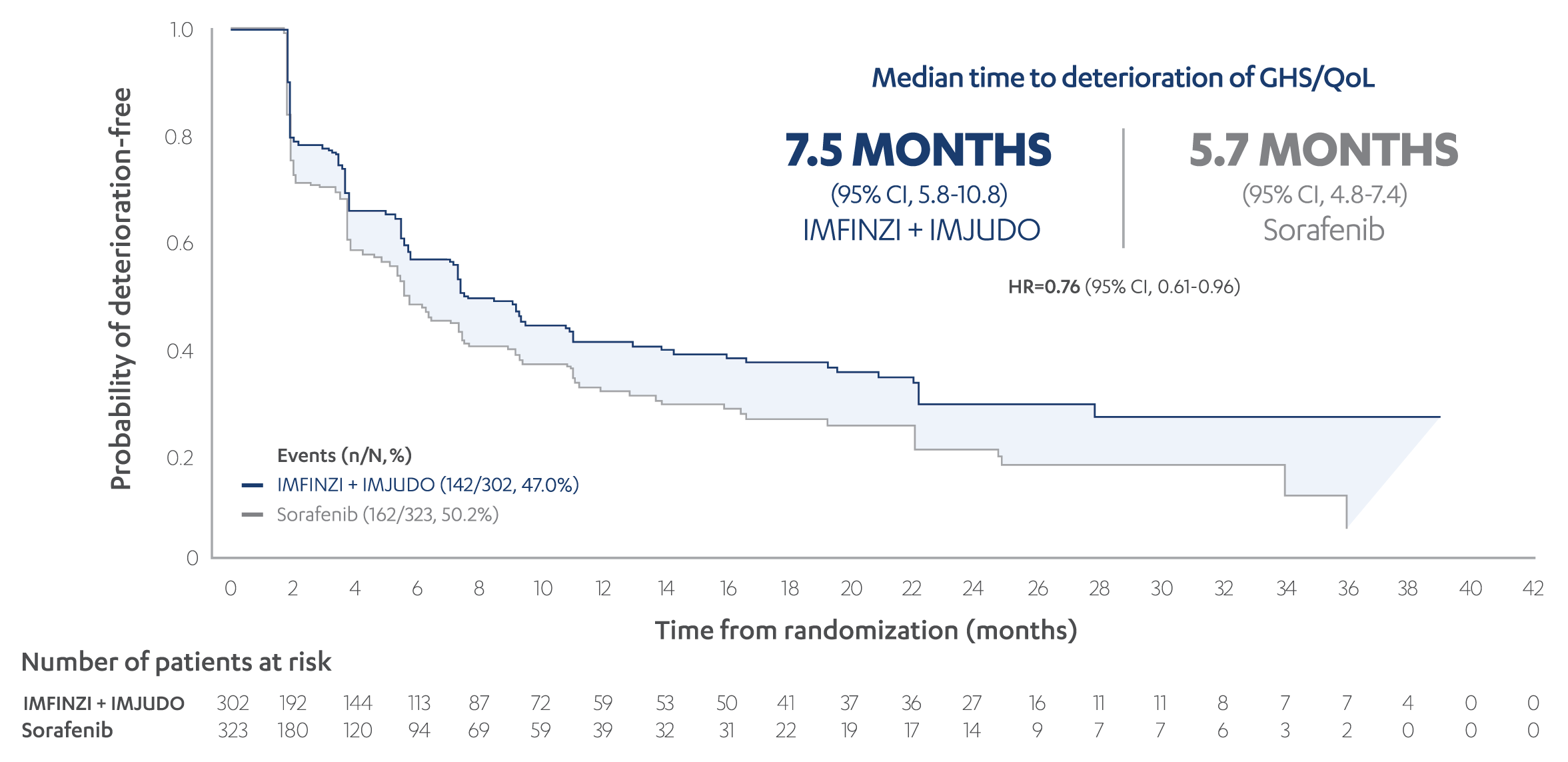
Health-related quality of life, functioning, and symptoms were assessed using EORTC QLQ-C30 and QLQ-HCC182
- Results should be interpreted based on the open-label study design and were not tested for statistical significance1,2
- EORTC QLQ-HCC18 is a supplementary questionnaire designed to evaluate symptoms and side effects specifically in HCC patients when used in conjunction with the QLQ-C30. The QLQ-C30 and QLQ-HCC18 use the same 0 to 100 scale, but in the QLQ-HCC18, high scores represent a high level of symptom severity2
- TTD in symptoms was defined as time from randomization to first clinically meaningful deterioration (increase from baseline of ≥10 points) confirmed at a subsequent visit or death2
TIME TO DETERIORATION IN PROs/SYMPTOMS WITH
IMFINZI + IMJUDO AND SORAFENIB (secondary endpoint)2
TIME TO DETERIORATION IN PROs/
SYMPTOMS WITH IMFINZI + IMJUDO AND SORAFENIB (secondary endpoint)2
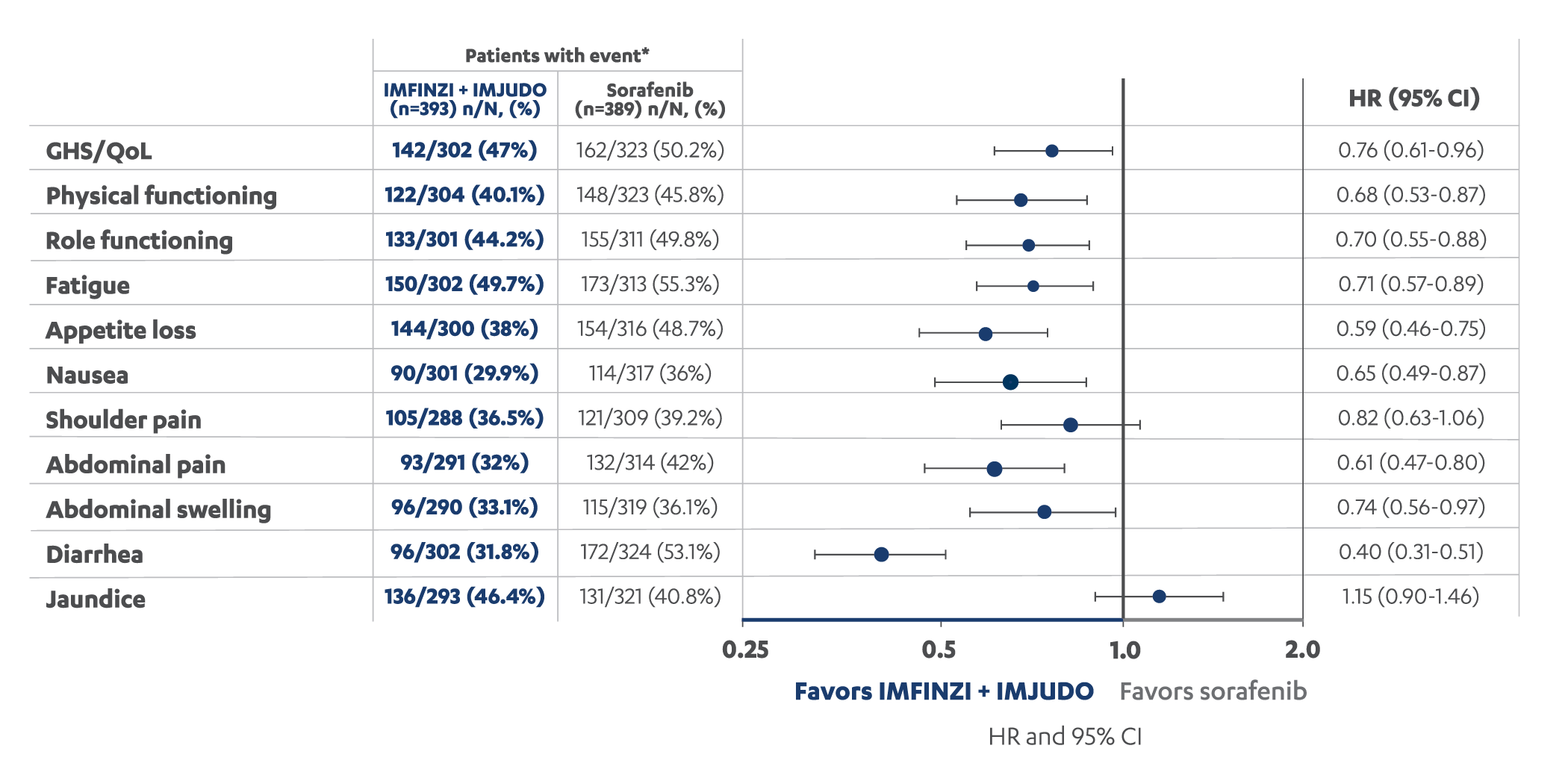
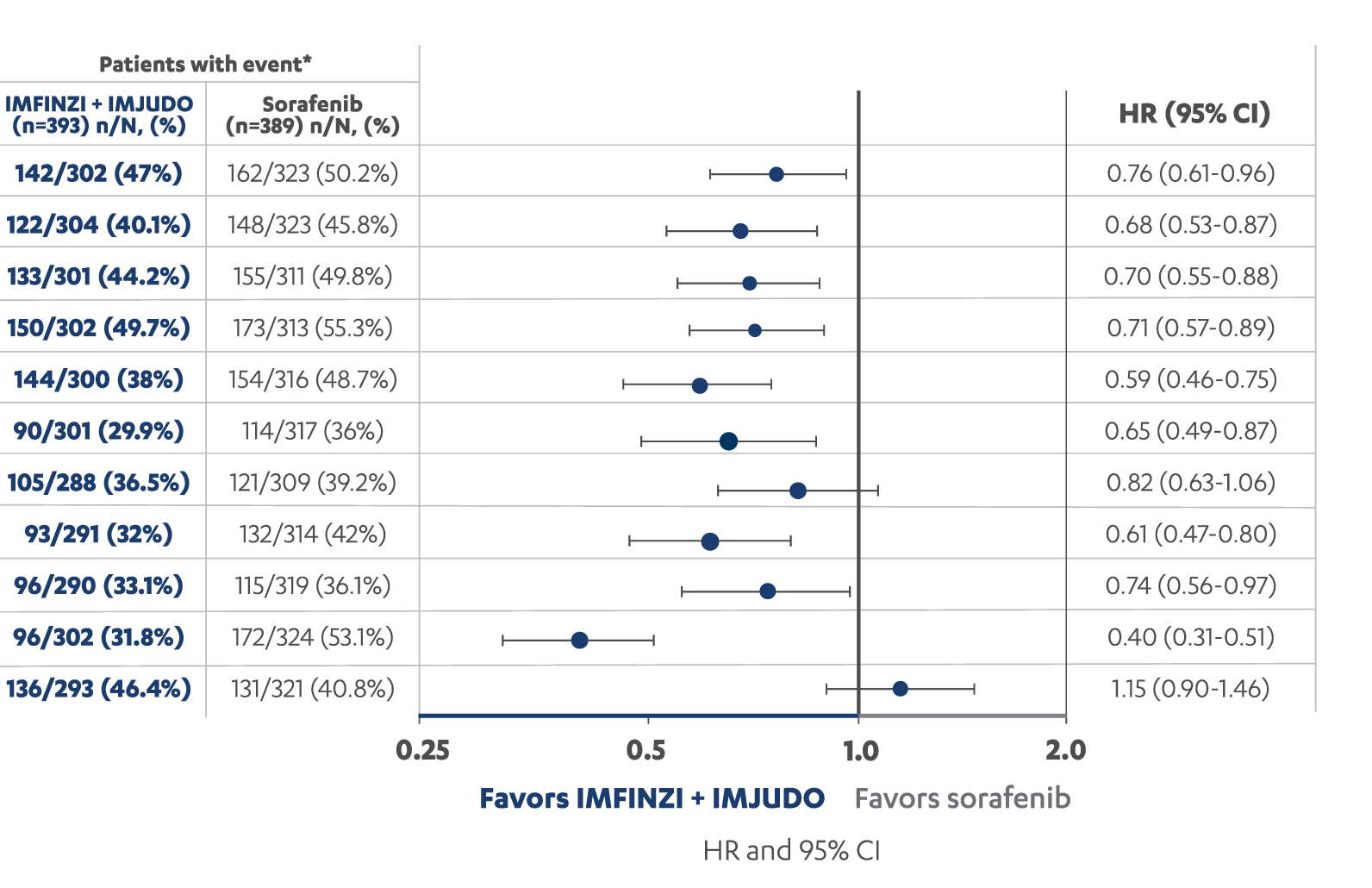
HRs and 95% CIs calculated for IMFINZI + IMJUDO vs sorafenib using a Cox proportional hazard model adjusting for treatment, etiology of liver disease, ECOG PS score, and MVI.
*Data provided based on number of patients with evaluable questionnaires.




 This product information is intended for US Healthcare Professionals only.