

~6-year OS data ~6-year OS data

EFFICACY

See HIMAYALA trial results in patients with unresectable HCC

Results from the HIMALAYA study include primary OS data, ~6-year OS follow-up analysis (post hoc), and OS data for subgroups by liver function (exploratory)

In unresectable hepatocellular carcinoma

What were the overall survival results demonstrated in the HIMALAYA study?

STATISTICALLY SUPERIOR OS (primary analysis)1,2,4

16.4 months mOS with IMFINZI + IMJUDO

(95% CI, 14.2-19.6)

vs

13.8 months mOS with sorafenib

(95% CI, 12.3-16.1)

The hazard ratio was 0.78 (95% CI, 0.66-0.92) with a P value of 0.0035.

The hazard ratio was 0.78 (95% CI, 0.66-0.92) with a P value of 0.0035.

The HR is based on the stratified Cox proportional hazard model. The P value is based on a stratified log-rank test and a Lan-DeMets alpha spending function with O'Brien-Fleming-type boundary and the actual number of events observed. The boundary for declaring statistical significance for IMFINZI + IMJUDO vs sorafenib was 0.0398. Median duration of follow-up was 33.2 months (range: 31.7-34.5) for IMFINZI + IMJUDO and 32.2 months (range: 30.4-33.7) for sorafenib. Data cutoff: August 27, 2021.

The HR is based on the stratified Cox proportional hazard model. The P value is based on a stratified log-rank test and a Lan-DeMets alpha spending function with O'Brien-Fleming-type boundary and the actual number of events observed. The boundary for declaring statistical significance for IMFINZI + IMJUDO vs sorafenib was 0.0398. Median duration of follow-up was 33.2 months (range: 31.7-34.5) for IMFINZI + IMJUDO and 32.2 months (range: 30.4-33.7) for sorafenib. Data cutoff: August 27, 2021.

What were the results of the 5-year and ~6-year follow-up (post-hoc) analyses for HIMALAYA?

IMFINZI + IMJUDO is the FIRST & ONLY first-line immunotherapy regimen in uHCC with BEYOND 5 years of OS data1-3

A first in uHCC: ONLY IMFINZI + IMJUDO has BEYOND 5 years of follow-up in the 1L treatment of adults with uHCC1-3

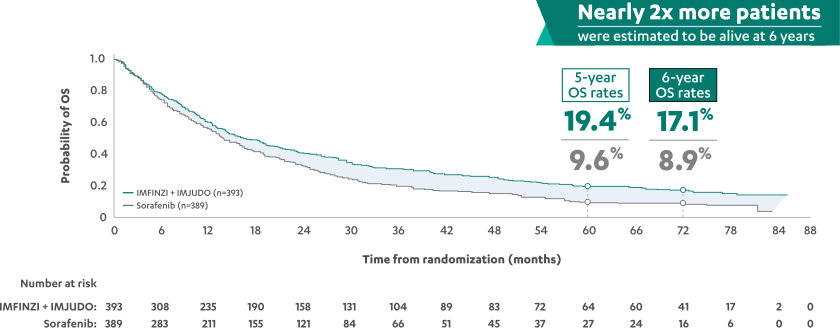
NEW ~6-YEAR OS UPDATE (post-hoc analysis)3

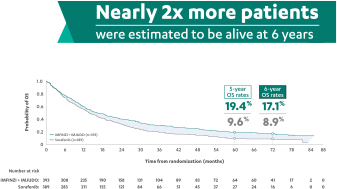
Nearly 2x more patients were estimated to be alive at ~6years Nearly 2x more patients were estimated to be alive at ~6years
  • At the time of the ~6-year post-hoc analysis, mOS was 16.4 months (95% CI, 14.2-19.6) with IMFINZI + IMJUDO and 13.8 months (95% CI, 12.3-16.1) with sorafenib (HR=0.76 [95% CI, 0.65-0.89])
  • The ~6-year post-hoc analysis, including landmark OS rates, was not powered for statistical significance. Estimates of OS rates at 60 and 72 months were calculated using Kaplan-Meier technique
  • In the post-hoc analysis, median duration of follow-up was 71.3 months (range: 6.2-85.0) for IMFINZI + IMJUDO and 38.3 months (range: 0.03-83.3) for sorafenib

Data cutoff: March 3, 2025.

IMFINZI + IMJUDO set the ~6-year benchmark for OS data with a 1L dual-IO regimen in uHCC1-3

Additional post-hoc data from the HIMALAYA study include:

What were the OS results across patient subgroups from the 5-year follow-up analysis (post-hoc)?

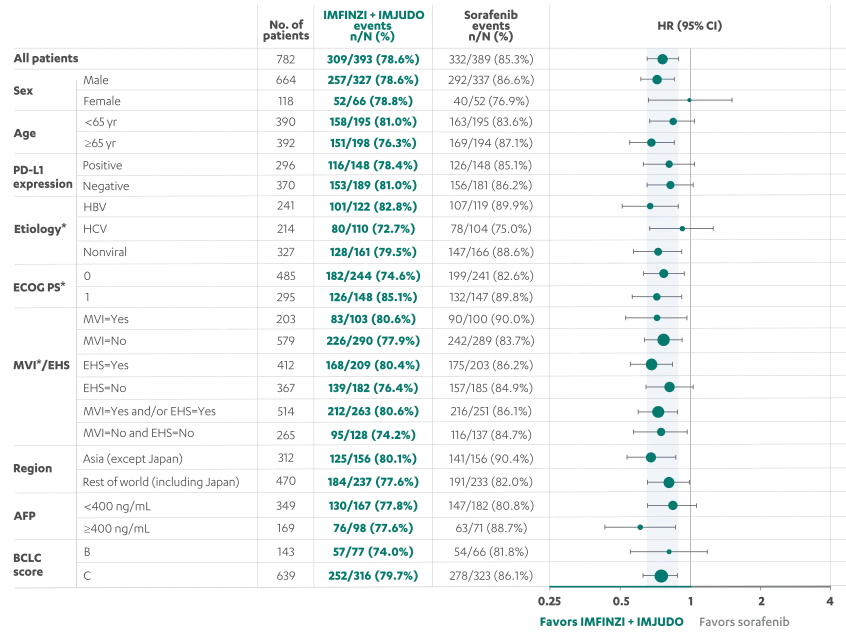
In the HIMALAYA study, IMFINZI + IMJUDO demonstrated consistent OS data across most prespecified subgroups

OVERALL SURVIVAL BY PRESPECIFIED SUBGROUP (post-hoc analysis)5

HIMALAYA Regimen Post-hoc OS Analysis
 

SCROLL

For all patients, OS HRs and 95% CIs were calculated using a Cox proportional hazard model adjusting for treatment, etiology, ECOG PS, and MVI. For the subgroup analysis, the HR and 95% CI were estimated from an unstratified Cox proportional hazard model with treatment as the only covariate and using the Efron method to control for ties.

*Stratification factors.

  • Post-hoc OS analysis of prespecified subgroups was not powered to show differences between or within individual subgroups and was not powered for statistical significance4

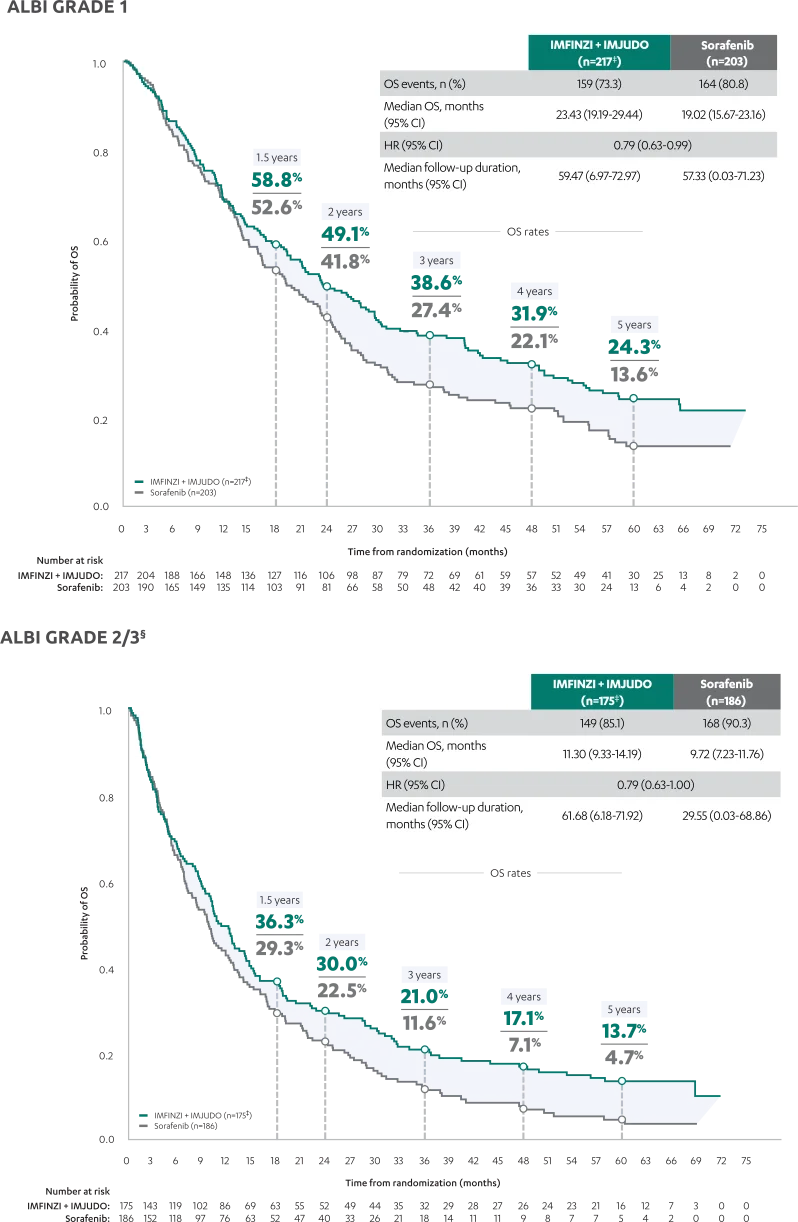
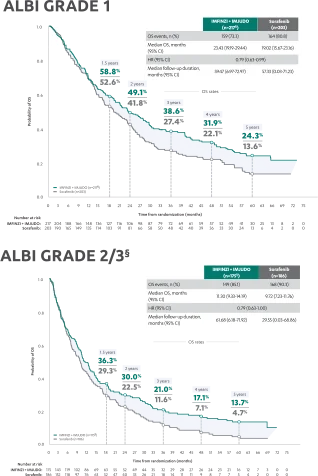
What were the OS results from the 5-year post-hoc analysis for ALBI Grade 1 and Grade 2/3 patient subgroups?

Post-hoc analysis; not powered for statistical significance6

5-YEAR OS DATA BY BASELINE ALBI GRADE (post-hoc analysis)6†

HIMALAYA Regimen 5-Year OS Data by Baseline ALBI Grade

Data cutoff: March 1, 2024.

ALBI grade data not available for 1 participant.

§One participant in the IMFINZI + IMJUDO arm and 1 participant in the sorafenib arm were classified as ALBI Grade 3 at baseline.

Refer to Kudo M, et al. 2024.

  • The ALBI grade subgroup analysis was post hoc and not powered for statistical significance6

IMFINZI + IMJUDO is the FIRST & ONLY dual-IO therapy in uHCC with
5-year OS data in patients across ALBI grades at baseline1,2,6,7

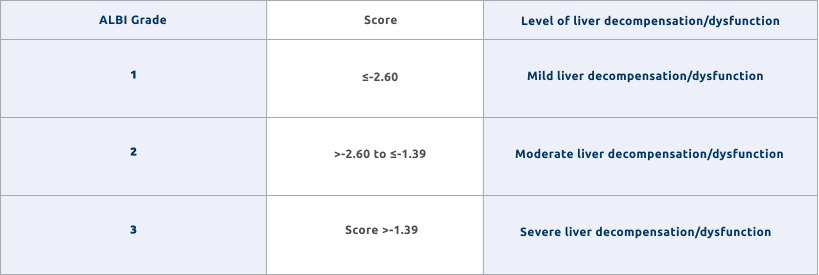
What are the ALBI grades of liver dysfunction in unresectable HCC?

ALBUMIN-BILIRUBIN (ALBI) GRADING8

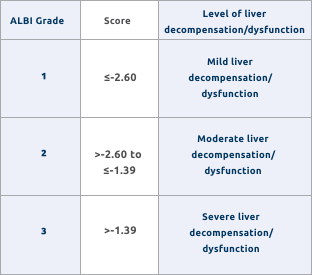
Table showing the Albumin-Bilirubin Grading System for calculating 3 levels of liver dysfunction severityTable showing the Albumin-Bilirubin Grading System for calculating 3 levels of liver dysfunction severity

How many patients in the HIMALAYA study had viral hepatitis vs nonviral disease etiology?

Disease etiologies in the HIMALAYA study were well balanced between arms4

BASELINE DISEASE ETIOLOGY4

Image of 2 bar charts showing the balance of disease etiology for patients enrolled in the IMFINZI + IMJUDO arm and the sorafenib arm of the HIMALAYA trial

||No active viral hepatitis identified.


SCROLL

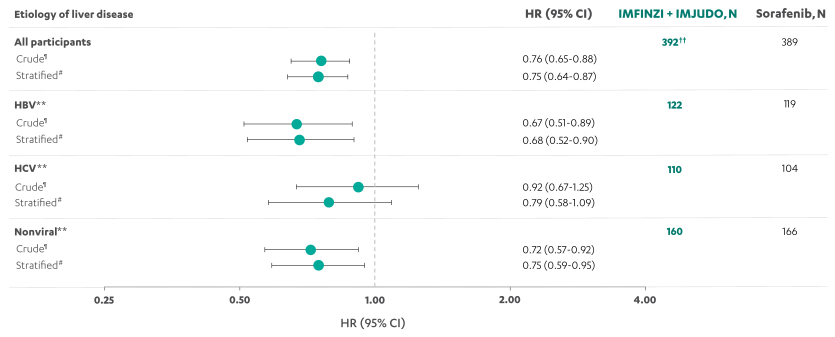
What were the 5-year OS results for patients with viral or nonviral etiology?

Overall survival results at 5 years were consistent across etiological subgroups5

5-YEAR OS RESULTS BY ETIOLOGY (post-hoc analysis)5

Forest plot showing consistent 5-year survival across patients with HBV, HCV, and nonviral disease etiology in the HIMALAYA study
 

SCROLL

  • Post-hoc OS analysis of prespecified subgroups was not powered to show differences between or within individual subgroups and was not powered for statistical significance4

The hazard ratio and 95% CI from the crude model are estimated from an unstratified Cox proportional hazards model with treatment as the only covariate and using the Efron method to control for ties.

#The hazard ratio and 95% CI from the stratified model are estimated from a stratified Cox proportional hazards model adjusting for EHS (no vs yes/missing), ALBI grade (1 vs 2/3), and using the Efron method to control for ties.

**Values of etiology of liver disease (HBV vs HCV vs others/nonviral) are obtained from the pathology at screening.

††One participant was removed due to missing ALBI score.

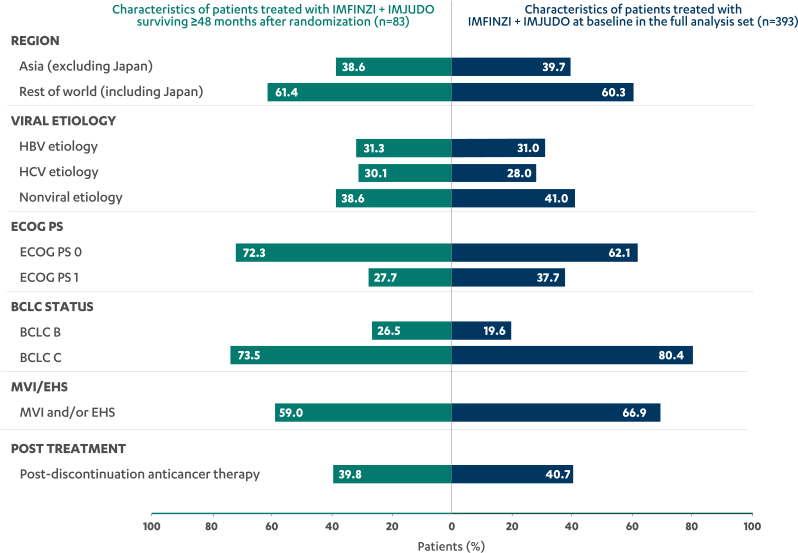
What were the characteristics of patients treated with IMFINZI + IMJUDO at baseline and at the 5-year update?

A post-hoc analysis was performed to characterize the patients surviving ≥48 months after randomization‡‡

CHARACTERISTICS OF PATIENTS TREATED WITH IMFINZI + IMJUDO AT THE 5-YEAR UPDATE AND AT BASELINE IN THE FULL ANALYSIS SET
(post-hoc analysis)4,5,9

Tornado plot showing that characteristics were similar for patients at baseline and those achieving long-term survival in the HIMALAYA study
 

SCROLL

HBV: Patients who tested positive for HBsAg or anti-HBcAb with detectable HBV DNA. HCV: Patients who tested positive for HCV or had a history of HCV infection. Nonviral: No active viral hepatitis identified. Viral etiology, MVI, and/or EHS determined at screening. BCLC determined at study entry.

‡‡Data cutoff: March 1, 2024.4,5,9

In the IMFINZI + IMJUDO arm, characteristics of patients at the 5-year update were generally consistent with those of the population at baseline4,5,9

Objective Response Rate, Duration
of Response, and Time to Response

In the first-line treatment of unresectable HCC

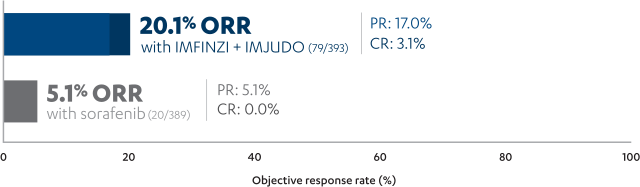
What was the objective response rate with IMFINZI + IMJUDO and sorafenib at primary analysis?

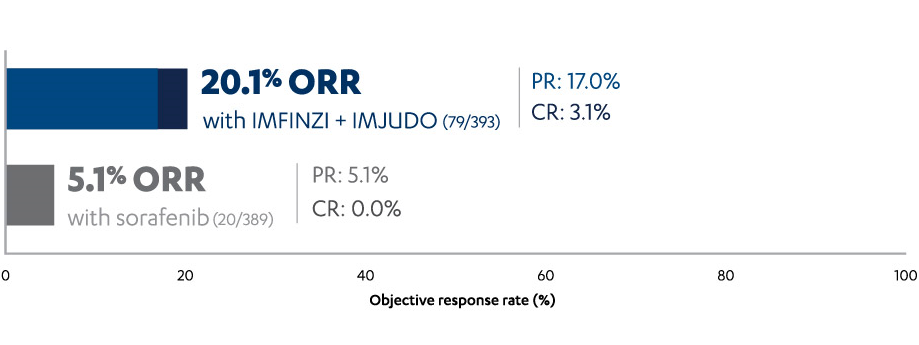
In the HIMALAYA study, the ORR was 20.1% with IMFINZI + IMJUDO and 5.1% with sorafenib.1,2,4

CONFIRMED OBJECTIVE RESPONSE RATE IN THE
INTENT-TO-TREAT POPULATION (secondary endpoint)1,2,4*
Objective Response Rate with IMFINZI + IMJUDO and Sorafenib
 

SCROLL

*Based on Clopper-Pearson method.

  • Confirmed responses by investigator assessment according to RECIST v1.1. Not powered for statistical significance4
  • The disease control rate was 60.1% with IMFINZI + IMJUDO and 60.7% with sorafenib. Not powered for statistical significance.4

Disease control rate is the sum of complete response rate, partial response rate, and stable disease rate.4

What was the duration of response and time to response with IMFINZI + IMJUDO and sorafenib at primary analysis?

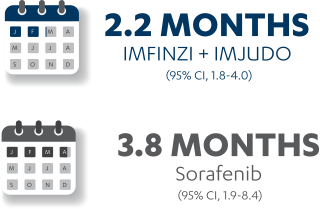
In the HIMALAYA study, the median DoR was 22.3 months with IMFINZI + IMJUDO and 18.4 months with sorafenib. The median TTR was 2.2 months with IMFINZI + IMJUDO and 3.8 months with sorafenib.1,2,4

MEDIAN DURATION OF RESPONSE
(secondary endpoint)1,2,4
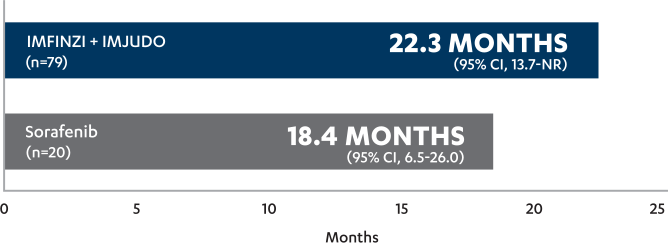
Duration of Response for IMFINZI + IMJUDO and Sorafenib
 

SCROLL

  • Duration of response was defined as the time from first documentation of response until the date of progression, death, or the last evaluable RECIST assessment for patients who had not progressed. Not powered for statistical significance4
  • The percentage of patients with duration of response ≥6 months was 82.3% with IMFINZI + IMJUDO and 78.9% with sorafenib1,2
  • The percentage of patients with duration of response ≥12 months was 65.8% with IMFINZI + IMJUDO and 63.2% with sorafenib1,2
 

MEDIAN TIME TO RESPONSE
(secondary endpoint)4
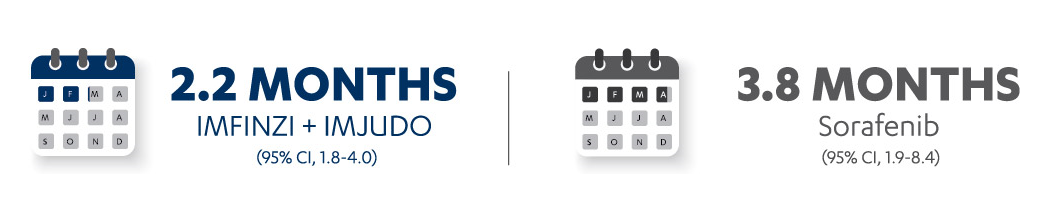
Median Time to Response for IMFINZI + IMJUDO and Sorafenib Median Time to Response for IMFINZI + IMJUDO and Sorafenib
  • Time to response was defined as the time from randomization to first confirmed response according to RECIST assessment. Not powered for statistical significance4
  • Median progression-free survival was 3.8 months (95% CI, 3.7-5.3) with IMFINZI + IMJUDO and 4.1 months (95% CI, 3.7-5.5) with sorafenib (HR=0.90 [95% CI, 0.77-1.05]); PFS was not statistically significant1,2‡

The HR is based on the stratified Cox proportional hazard model.1,2
Study Design and Patient Characteristics

What was the HIMALAYA study design?

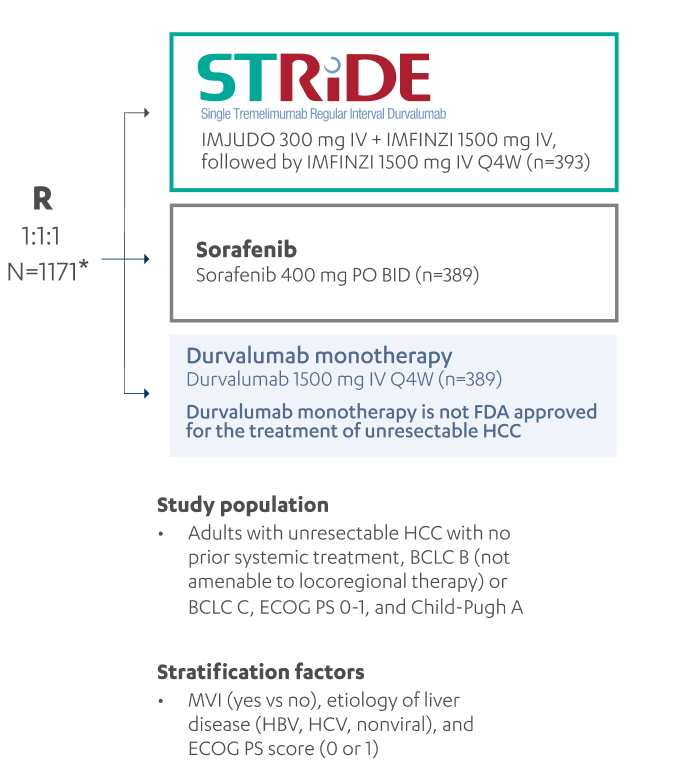
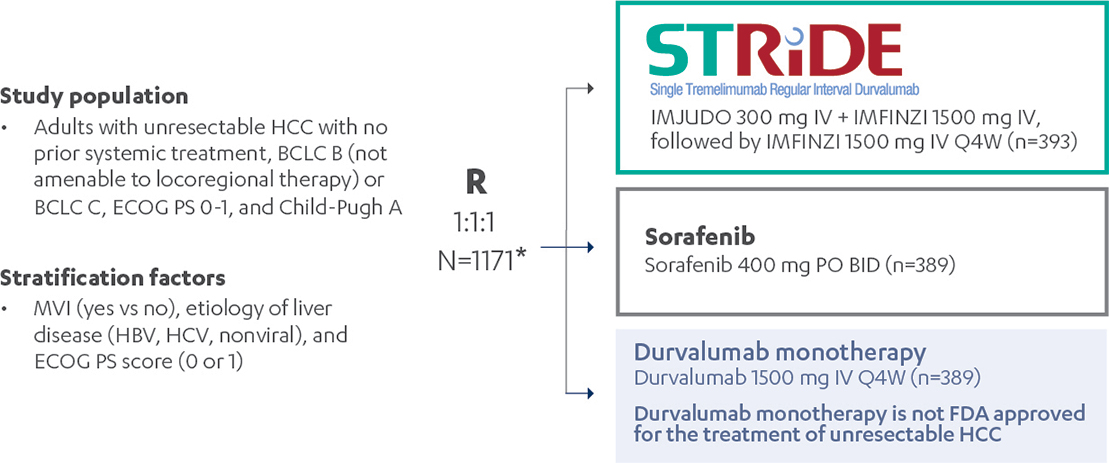
HIMALAYA was a Phase III, open-label, multicenter, global study that evaluated IMFINZI + IMJUDO for overall survival
vs sorafenib in the first-line treatment of unresectable HCC1,2,4

STRIDE (Single Tremelimumab Regular Interval Durvalumab) is the name given to the IMFINZI + IMJUDO regimen evaluated in the HIMALAYA study4

STUDY DESIGN: PHASE III, OPEN-LABEL, MULTICENTER, GLOBAL STUDY1,2,4

Himalaya Study Design and Patient Characteristics Himalaya Study Design and Patient Characteristics

Treatment continued until disease progression or unacceptable toxicity. Patients in all arms could continue to receive treatment after evidence of disease progression if, in the investigator’s opinion, they were still benefiting from treatment and continued to meet inclusion and exclusion criteria.

*The HIMALAYA study included an additional arm of therapy: The IMJUDO 75-mg + IMFINZI arm (n=153) was closed following a preplanned analysis of a Phase II study. Results from this arm are not reported in this material, and this dosing regimen is not approved for use.4

The HIMALAYA study included patients with BCLC B or C disease, ECOG PS 0 or 1, and Child-Pugh A classification4

  • What were the key exclusion criteria for
    the HIMALAYA study?1,2,4
  • Clinically meaningful ascites or hepatic encephalopathy
  • Portal vein tumor thrombosis of the main trunk
  • Active or prior GI bleeding within the past 12 months
  • Active or prior documented autoimmune or inflammatory disorders
  • HBV and HCV coinfection
  • What were the primary, secondary, and exploratory endpoints for the HIMALAYA study?
  • Primary endpoint: Overall survival for IMFINZI + IMJUDO was evaluated for statistical superiority vs sorafenib1,2,4
  • Select secondary endpoints: OS rates at 18, 24, and 36 months (primary analysis); PFS, ORR, DoR, safety, and PROs1,2,4
  • Select exploratory endpoints: OS rates at 18, 24, 36, 48, 60, and 72 months (48-, 60-, and 72-month timepoints are post-hoc analyses)3

EGD IconIs EGD required to start treatment with IMFINZI + IMJUDO? No EGD was required to initiate therapy in the HIMALAYA study1,2,4‡

PFS, ORR, and DoR were investigator assessed according to RECIST v1.1. Tumor assessments were conducted every 8 weeks for the first 12 months and then every 12 weeks thereafter.1,2,4

No EGD was required to screen for esophageal varices for trial eligibility. Patients with active or prior documented GI bleeding within 12 months were excluded. For patients with a history of GI bleeding for greater than 12 months or assessed as high risk for esophageal variceal, adequate endoscopic therapy was required.1,2,4

The HIMALAYA study is the largest positive Phase III trial to evaluate IO therapy as 1L treatment of unresectable HCC4,10

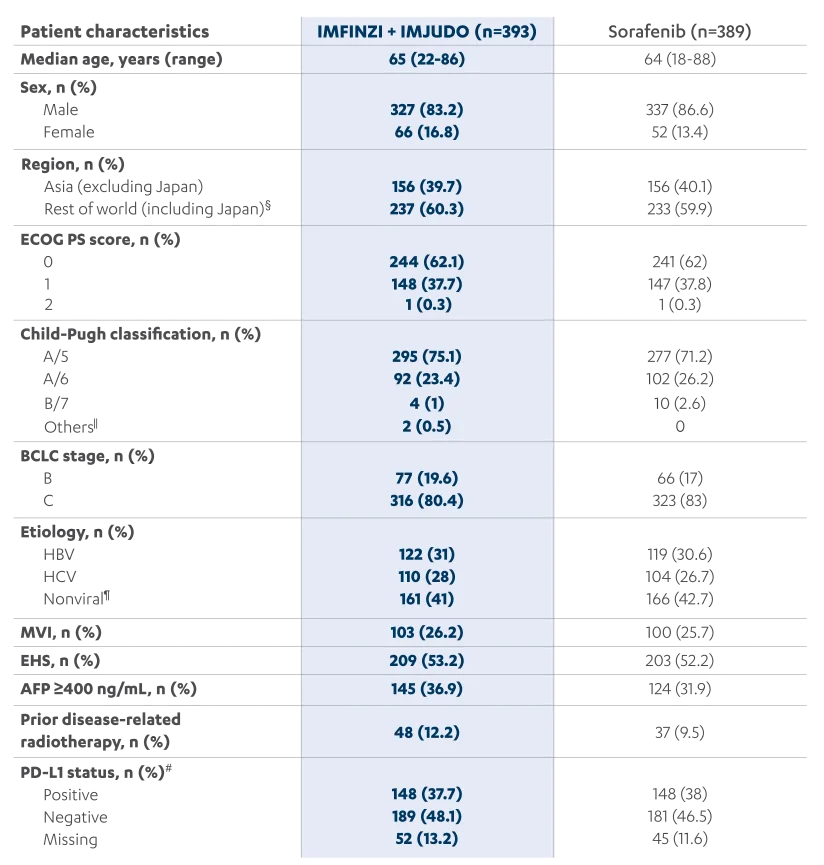
Patient demographics and disease characteristics were well balanced between arms4

BASELINE DEMOGRAPHICS AND DISEASE CHARACTERISTICS4

Table listing the demographics and characteristics of patients in the HIMALAYA study at baseline, including age, region, ECOG score, and BCLC stage

§Includes Brazil, Canada, France, Germany, Italy, Japan, Russia, Spain, Ukraine, and the United States.

||None of the above.

No active viral hepatitis identified.

#Baseline PD-L1 results were not available for patients who were randomized but not treated. PD-L1 expression level was based on the tumor and immune cell positivity score method as PD-L1 positive (≥1%) or negative (<1%).

Shield icon with KEY POINTS: EFFICACY

IMFINZI + IMJUDO significantly improved OS vs sorafenib in the Phase III HIMALAYA study1,2,4:

  • 22% reduction in risk of death (HR=0.78 [95% CI, 0.66-0.92]; P=0.0035)
  • mOS was 16.4 months with IMFINZI + IMJUDO vs 13.8 months with sorafenib
  • IMFINZI + IMJUDO is the FIRST & ONLY 1L IO regimen in uHCC with BEYOND 5 years of OS data (post-hoc analysis; not powered for statistical significance)1-3 *
  • OS rates at 6 years were 17.1% with IMFINZI + IMJUDO and 8.9% with sorafenib
  • mOS was 16.4 months (95% CI, 14.2-19.6) with IMFINZI + IMJUDO and 13.8 months (95% CI, 12.3-16.1) with sorafenib (HR=0.76 [95% CI, 0.65-0.89])
  • The FIRST & ONLY dual immunotherapy in uHCC with 5-year OS data by ALBI Grade at baseline (post-hoc analysis)1,2,6,7

*mDOF: 71.3 months (range: 6.2-85.0) for IMFINZI + IMJUDO and 38.3 months (range: 0.03-83.3) for sorafenib. DCO: March 3, 2025.3

View safety information