SAFETY

SAFETY
In BCG-naïve, HR-NMIBC
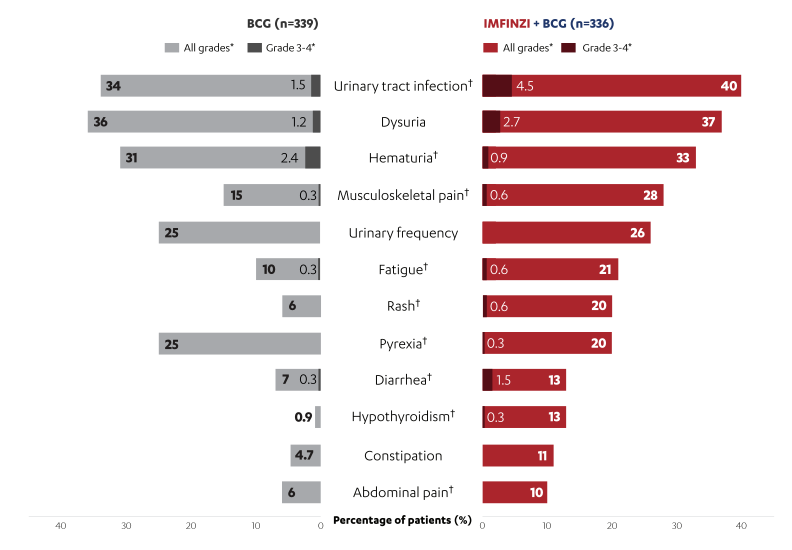
Adverse reactions occurring in ≥10% of patients IN THE POTOMAC STUDY1

SCROLL
GRADE DESCRIPTIONS PER CTCAE 4.032
In the POTOMAC study, most ARs reported with IMFINZI + BCG were Grade 1 or 23§
*Graded according to NCI CTCAE version 4.03.1
†Includes other related terms.1
‡Serious adverse reactions were defined as treatment-related adverse events that resulted in death, were life-threatening, required hospitalization, caused significant disability or permanent damage, were congenital anomalies, or were medically important events requiring intervention to prevent serious outcomes.4
§In the IMFINZI + BCG arm of the POTOMAC study, any grade ARs occurred in 89% of patients and Grade 3 or 4 ARs occurred in 21% of patients.3
Common laboratory abnormalities observed in the POTOMAC study are reported below1
LABORATORY ABNORMALITIES WORSENING FROM BASELINE OCCURRING IN ≥20%* OF PATIENTS WHO RECEIVED IMFINZI + BCG1
| IMFINZI + BCG (n=336) |
BCG (n=339) |
|||
|---|---|---|---|---|
| Laboratory abnormality | All grades† (%)‡ | Grade 3-4† (%)‡ | All grades† (%)‡ | Grade 3-4† (%)‡ |
| Chemistry | ||||
| Increased glucose | 43 | 7 | 34 | 4.5 |
| Increased AST | 43 | 6 | 28 | 0 |
| Increased lipase | 42 | 18 | 29 | 6 |
| Increased ALT | 42 | 6 | 26 | 0.3 |
| Increased GGT | 40 | 7 | 32 | 2.2 |
| Increased potassium | 39 | 2.1 | 33 | 2.4 |
| Increased creatinine | 30 | 1.2 | 23 | 0.9 |
| Increased sodium | 23 | 3 | 11 | 0 |
| Hematology | ||||
| Decreased hemoglobin | 35 | 0.6 | 24 | 0.6 |
| Decreased lymphocytes | 27 | 3 | 13 | 1.2 |
SCROLL
*The frequency cutoff is based on any grade change from baseline.
†Graded according to NCI CTCAE version 4.03.
‡Each test incidence is based on the number of patients who had both baseline and at least 1 on-study laboratory measurement available: IMFINZI with BCG (range: 289-335) and BCG (range: 284-333).
In BCG-naïve, HR-NMIBC
Median number of BCG instillations was the same across treatment arms3,5


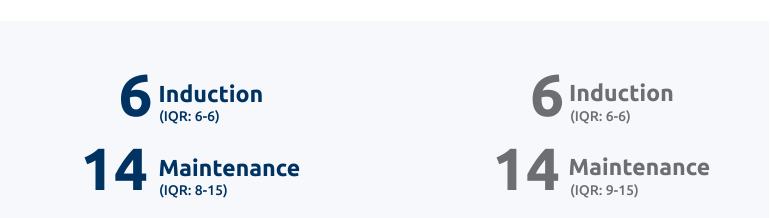

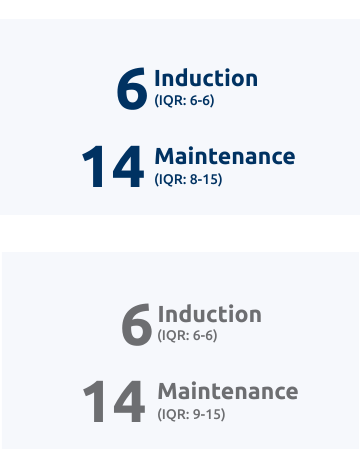

Discontinuation of BCG due to ARs was similar across treatment arms: 21% with IMFINZI + BCG and 20% with BCG3

There are no contraindications for IMFINZI® (durvalumab) or IMJUDO® (tremelimumab-actl).
IMFINZI, as a single agent, is indicated for the treatment of adult patients with unresectable Stage III non-small cell lung cancer (NSCLC) whose disease has not progressed following concurrent platinum-based chemotherapy and radiation therapy.
IMFINZI in combination with platinum-containing chemotherapy as neoadjuvant treatment, followed by IMFINZI continued as a single agent as adjuvant treatment after surgery, is indicated for the treatment of adult patients with resectable (tumors ≥4 cm and/or node positive) NSCLC and no known epidermal growth factor receptor (EGFR) mutations or anaplastic lymphoma kinase (ALK) rearrangements.
IMFINZI, in combination with IMJUDO and platinum-based chemotherapy, is indicated for the treatment of adult patients with metastatic NSCLC with no sensitizing EGFR mutations or ALK genomic tumor aberrations.
IMFINZI, in combination with etoposide and either carboplatin or cisplatin, is indicated for the first-line treatment of adult patients with extensive-stage small cell lung cancer (ES-SCLC).
There are no contraindications for IMFINZI® (durvalumab) or IMJUDO® (tremelimumab-actl).
Important immune-mediated adverse reactions listed under Warnings and Precautions may not include all possible severe and fatal immune-mediated reactions. Immune-mediated adverse reactions, which may be severe or fatal, can occur in any organ system or tissue. Immune-mediated adverse reactions can occur at any time after starting treatment or after discontinuation. Monitor patients closely for symptoms and signs that may be clinical manifestations of underlying immune-mediated adverse reactions. Evaluate clinical chemistries including liver enzymes, creatinine, adrenocorticotropic hormone (ACTH) level, and thyroid function at baseline and before each dose. In cases of suspected immune-mediated adverse reactions, initiate appropriate workup to exclude alternative etiologies, including infection. Institute medical management promptly, including specialty consultation as appropriate. Withhold or permanently discontinue IMFINZI and IMJUDO depending on severity. See USPI Dosing and Administration for specific details. In general, if IMFINZI and IMJUDO requires interruption or discontinuation, administer systemic corticosteroid therapy (1 mg to 2 mg/kg/day prednisone or equivalent) until improvement to Grade 1 or less. Upon improvement to Grade 1 or less, initiate corticosteroid taper and continue to taper over at least 1 month. Consider administration of other systemic immunosuppressants in patients whose immune-mediated adverse reactions are not controlled with corticosteroid therapy.
IMFINZI, as a single agent, is indicated for the treatment of adult patients with unresectable Stage III non-small cell lung cancer (NSCLC) whose disease has not progressed following concurrent platinum-based chemotherapy and radiation therapy (cCRT).
IMFINZI in combination with platinum-containing chemotherapy as neoadjuvant treatment, followed by IMFINZI continued as a single agent as adjuvant treatment after surgery, is indicated for the treatment of adult patients with resectable (tumors ≥4 cm and/or node positive) NSCLC and no known epidermal growth factor receptor (EGFR) mutations or anaplastic lymphoma kinase (ALK) rearrangements.
IMFINZI, in combination with IMJUDO and platinum-based chemotherapy, is indicated for the treatment of adult patients with metastatic NSCLC with no sensitizing EGFR mutations or ALK genomic tumor aberrations.
IMFINZI, as a single agent, is indicated for the treatment of adult patients with limited-stage small cell lung cancer (LS-SCLC) whose disease has not progressed following concurrent platinum-based chemotherapy and radiation therapy (cCRT).
IMFINZI, in combination with etoposide and either carboplatin or cisplatin, is indicated for the first-line treatment of adult patients with extensive-stage small cell lung cancer (ES-SCLC).
IMFINZI, in combination with gemcitabine and cisplatin, is indicated for the treatment of adult patients with locally advanced or metastatic biliary tract cancer (BTC).
IMFINZI in combination with IMJUDO is indicated for the treatment of adult patients with unresectable hepatocellular carcinoma (uHCC).
IMFINZI in combination with carboplatin and paclitaxel followed by IMFINZI as a single agent is indicated for the treatment of adult patients with primary advanced or recurrent endometrial cancer that is mismatch repair deficient (dMMR) as determined by an FDA-authorized test.
IMFINZI in combination with Bacillus Calmette-Guérin (BCG) is indicated for the treatment of adult patients with BCG-naive, high-risk non-muscle-invasive bladder cancer (NMIBC).
IMFINZI in combination with gemcitabine and cisplatin as neoadjuvant treatment, followed by single agent IMFINZI as adjuvant treatment following radical cystectomy, is indicated for the treatment of adult patients with muscle-invasive bladder cancer (MIBC).
IMFINZI in combination with fluorouracil, leucovorin, oxaliplatin and docetaxel (FLOT) as neoadjuvant and adjuvant treatment, followed by single agent IMFINZI, is indicated for the treatment of adult patients with resectable gastric or gastroesophageal junction adenocarcinoma (GC/GEJC).
IMFINZI and IMJUDO can cause immune-mediated pneumonitis, which may be fatal. The incidence of pneumonitis is higher in patients who have received prior thoracic radiation.
IMFINZI with IMJUDO and platinum-based chemotherapy can cause immune-mediated colitis, which may be fatal. IMFINZI and IMJUDO can cause immune-mediated colitis that is frequently associated with diarrhea. Cytomegalovirus (CMV) infection/reactivation has been reported in patients with corticosteroid-refractory immune-mediated colitis. In cases of corticosteroid-refractory colitis, consider repeating infectious workup to exclude alternative etiologies.
IMFINZI and IMJUDO can cause immune-mediated hepatitis, which may be fatal.
IMFINZI and IMJUDO can cause immune-mediated nephritis.
IMFINZI and IMJUDO can cause immune-mediated rash or dermatitis. Exfoliative dermatitis, including Stevens-Johnson Syndrome (SJS), drug rash with eosinophilia and systemic symptoms (DRESS), and toxic epidermal necrolysis (TEN), has occurred with PD-1/L-1 and CTLA-4 blocking antibodies. Topical emollients and/or topical corticosteroids may be adequate to treat mild to moderate non-exfoliative rashes.
IMFINZI in combination with IMJUDO can cause immune-mediated pancreatitis. Immune-mediated pancreatitis occurred in 2.3% (9/388) of patients receiving IMFINZI and IMJUDO, including Grade 4 (0.3%) and Grade 3 (1.5%) adverse reactions.
The following clinically significant, immune-mediated adverse reactions occurred at an incidence of less than 1% each in patients who received IMFINZI and IMJUDO or were reported with the use of other immune-checkpoint inhibitors.
IMFINZI and IMJUDO can cause severe or life-threatening infusion-related reactions. Monitor for signs and symptoms of infusion-related reactions. Interrupt, slow the rate of, or permanently discontinue IMFINZI and IMJUDO based on the severity. See USPI Dosing and Administration for specific details. For Grade 1 or 2 infusion-related reactions, consider using pre-medications with subsequent doses.
Fatal and other serious complications can occur in patients who receive allogeneic hematopoietic stem cell transplantation (HSCT) before or after being treated with a PD-1/L-1 blocking antibody. Transplant-related complications include hyperacute graft-versus-host disease (GVHD), acute GVHD, chronic GVHD, hepatic veno-occlusive disease (VOD) after reduced intensity conditioning, and steroid-requiring febrile syndrome (without an identified infectious cause). These complications may occur despite intervening therapy between PD-1/L-1 blockade and allogeneic HSCT. Follow patients closely for evidence of transplant-related complications and intervene promptly. Consider the benefit versus risks of treatment with a PD-1/L-1 blocking antibody prior to or after an allogeneic HSCT.
Based on their mechanism of action and data from animal studies, IMFINZI and IMJUDO can cause fetal harm when administered to a pregnant woman. Advise pregnant women of the potential risk to a fetus. In females of reproductive potential, verify pregnancy status prior to initiating IMFINZI and IMJUDO and advise them to use effective contraception during treatment with IMFINZI and IMJUDO and for 3 months after the last dose of IMFINZI and IMJUDO.
There is no information regarding the presence of IMFINZI and IMJUDO in human milk; however, because of the potential for serious adverse reactions in breastfed infants from IMFINZI and IMJUDO, advise women not to breastfeed during treatment and for 3 months after the last dose.
The safety and effectiveness of IMFINZI and IMJUDO have not been established in pediatric patients.
IMFINZI, as a single agent, is indicated for the treatment of adult patients with unresectable Stage III non-small cell lung cancer (NSCLC) whose disease has not progressed following concurrent platinum-based chemotherapy and radiation therapy (cCRT).
IMFINZI in combination with platinum-containing chemotherapy as neoadjuvant treatment, followed by IMFINZI continued as a single agent as adjuvant treatment after surgery, is indicated for the treatment of adult patients with resectable (tumors ≥4 cm and/or node positive) NSCLC and no known epidermal growth factor receptor (EGFR) mutations or anaplastic lymphoma kinase (ALK) rearrangements.
IMFINZI, in combination with IMJUDO and platinum-based chemotherapy, is indicated for the treatment of adult patients with metastatic NSCLC with no sensitizing EGFR mutations or ALK genomic tumor aberrations.
IMFINZI, as a single agent, is indicated for the treatment of adult patients with limited-stage small cell lung cancer (LS-SCLC) whose disease has not progressed following concurrent platinum-based chemotherapy and radiation therapy (cCRT).
IMFINZI, in combination with etoposide and either carboplatin or cisplatin, is indicated for the first-line treatment of adult patients with extensive-stage small cell lung cancer (ES-SCLC).
IMFINZI, in combination with gemcitabine and cisplatin, is indicated for the treatment of adult patients with locally advanced or metastatic biliary tract cancer (BTC).
IMFINZI in combination with IMJUDO is indicated for the treatment of adult patients with unresectable hepatocellular carcinoma (uHCC).
IMFINZI in combination with carboplatin and paclitaxel followed by IMFINZI as a single agent is indicated for the treatment of adult patients with primary advanced or recurrent endometrial cancer that is mismatch repair deficient (dMMR) as determined by an FDA-authorized test.
IMFINZI in combination with Bacillus Calmette-Guérin (BCG) is indicated for the treatment of adult patients with BCG-naive, high-risk non-muscle-invasive bladder cancer (NMIBC).
IMFINZI in combination with gemcitabine and cisplatin as neoadjuvant treatment, followed by single agent IMFINZI as adjuvant treatment following radical cystectomy, is indicated for the treatment of adult patients with muscle-invasive bladder cancer (MIBC).
IMFINZI in combination with fluorouracil, leucovorin, oxaliplatin and docetaxel (FLOT) as neoadjuvant and adjuvant treatment, followed by single agent IMFINZI, is indicated for the treatment of adult patients with resectable gastric or gastroesophageal junction adenocarcinoma (GC/GEJC).
Please see Full Prescribing Information including Medication Guide for IMFINZI and IMJUDO.
You may report side effects related to AstraZeneca products  .
.
BCG=Bacillus Calmette-Guérin; CI=confidence interval; CIS=carcinoma in situ; DFS=disease-free survival; HR=hazard ratio; HR-NMIBC=high-risk non–muscle-invasive bladder cancer; IO=immuno-oncology; IV=intravenous; MIBC=muscle-invasive bladder cancer; NR=not reached; Q4W=every 4 weeks; TURBT=transurethral resection of bladder tumor.
BCG=Bacillus Calmette-Guérin; CIS=carcinoma in situ; HG=high grade; HR-NMIBC=high-risk non–muscle-invasive bladder cancer; NMIBC=non–muscle-invasive bladder cancer; RC=radical cystectomy; T1=papillary tumor that has invaded the lamina propria; Ta=non-invasive, papillary tumor confined to the bladder urothelium/urothelial lining; TURBT=transurethral resection of bladder tumor.
AUA=American Urological Association; BCG=Bacillus Calmette-Guérin; CI=confidence interval; CIS=carcinoma in situ; DFS=disease-free survival; ECOG=Eastern Cooperative Oncology Group; HG=high grade; HR=hazard ratio; HR-NMIBC=high-risk non–muscle-invasive bladder cancer; ICP=immune cells present (the percentage of tumor area occupied by any tumor-associated immune cells); IC+=immune cell PD-L1 positivity (the percentage area of ICP showing PD-L1–positive immune cell staining); I+M=induction + maintenance; ITT=intent to treat; IV=intravenous; MIBC=muscle-invasive bladder cancer; NC=not calculated; NMIBC=non–muscle-invasive bladder cancer; NR=not reached; OS=overall survival; PD-L1=programmed death-ligand 1; PS=performance status; Q4W=every 4 weeks; QW=every week; R=randomized; T1=papillary tumor that has invaded the lamina propria; Ta=non-invasive, papillary tumor confined to the bladder urothelium/urothelial lining; TC=tumor cell; TURBT=transurethral resection of bladder tumor.
AE=adverse event; ALT=alanine aminotransferase; ARs=adverse reactions; AST=aspartate aminotransferase; BCG=Bacillus Calmette-Guérin; GGT=gamma glutamyl transferase; HR-NMIBC=high-risk non–muscle-invasive bladder cancer; IQR=interquatrile range; NCI CTCAE=National Cancer Institute Common Terminology Criteria for Adverse Events.
ALT=alanine aminotransferase; AST=aspartate aminotransferase; BCG=Bacillus Calmette-Guérin; CIS=carcinoma in situ; DRESS=Drug Rash with Eosinophilia and Systemic Symptoms; HR-NMIBC=high-risk non–muscle-invasive bladder cancer; imARs=immune-mediated adverse reactions; IO=immuno-oncology; IV=intravenous; NCI CTCAE=National Cancer Institute Common Terminology Criteria for Adverse Events; SJS=Stevens-Johnson Syndrome; TEN=toxic epidermal necrolysis; ULN=upper limit of normal; USP=United States Pharmacopeia.


 This product information is intended for US Healthcare Professionals only.
IMFINZI is a registered trademark and AstraZeneca Access 360 is a trademark of the AstraZeneca group of companies.
©2026 AstraZeneca. All rights reserved. US-106492 Last Updated 6/26
©2026 AstraZeneca. All rights reserved. US-106492 Last Updated 6/26


 EFFICACY