
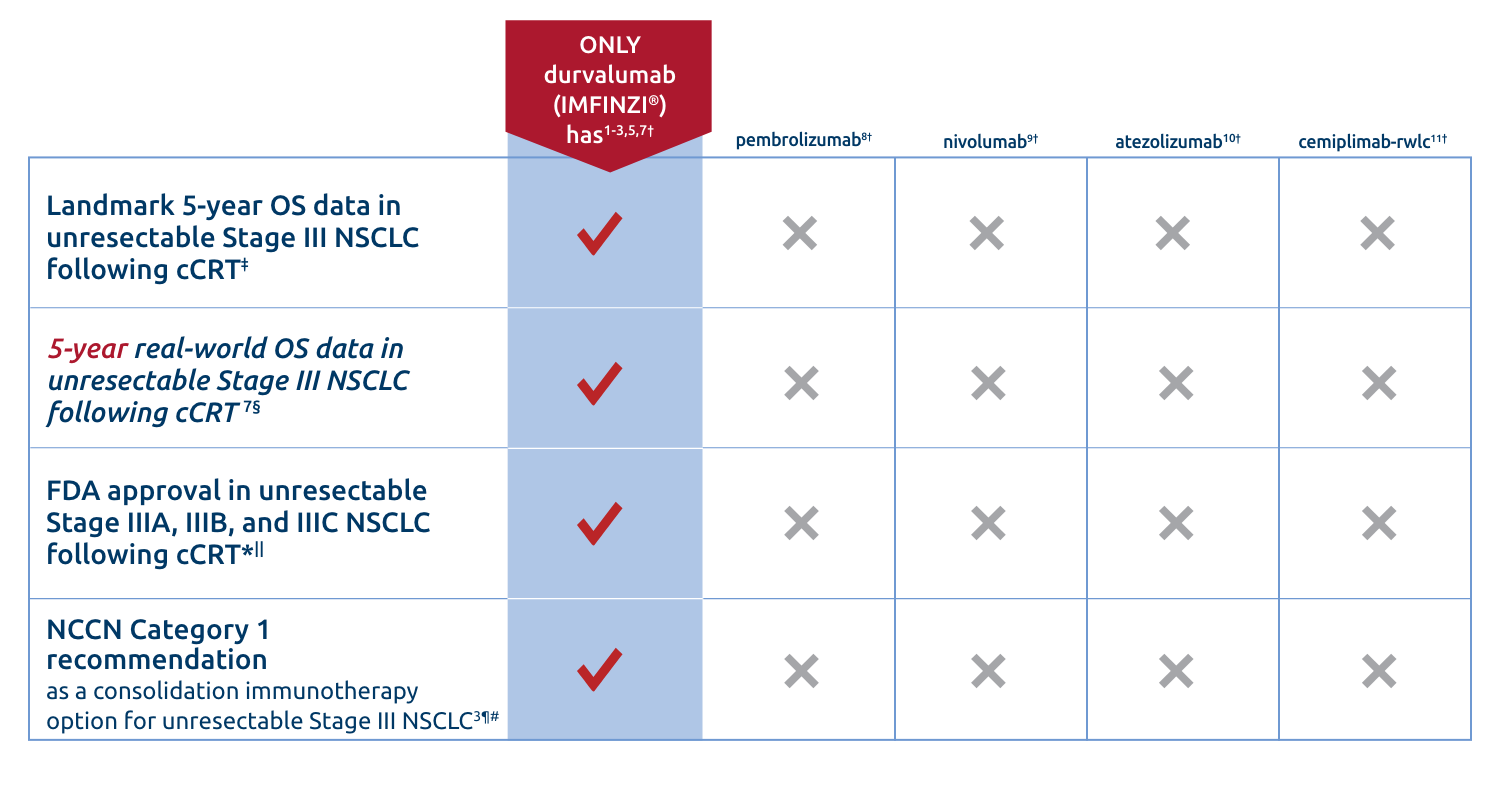
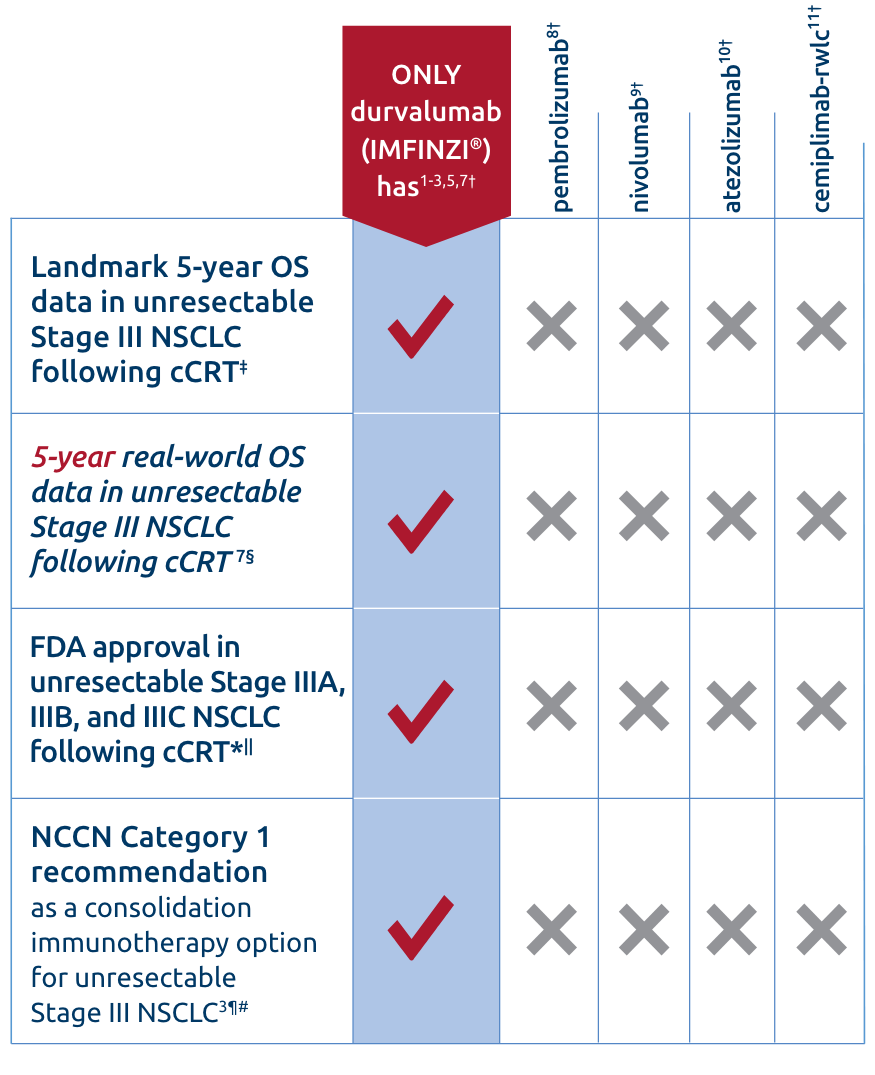
Refer all your patients with unresectable Stage III NSCLC to a radiation oncologist to ensure they have the opportunity to receive standard-of-care cCRT followed by IMFINZI1,2
NCCN Clinical Practice Guidelines in Oncology (NCCN Guidelines®) recommend evaluation of RT eligibility by a radiation oncologist for all patients with Stage III NSCLC3*
Determination of the appropriateness of radiation therapy should be made by radiation oncologists for all patients with Stage III NSCLC3
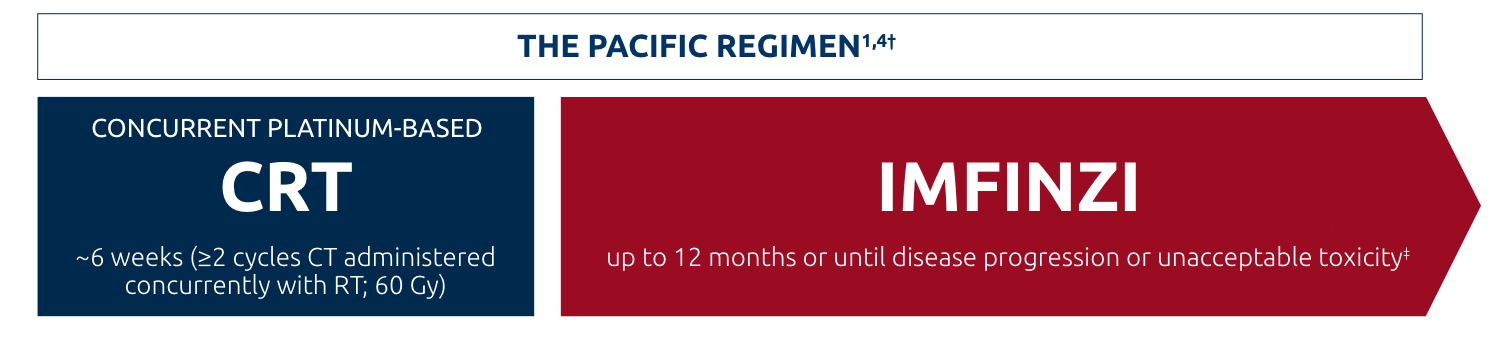
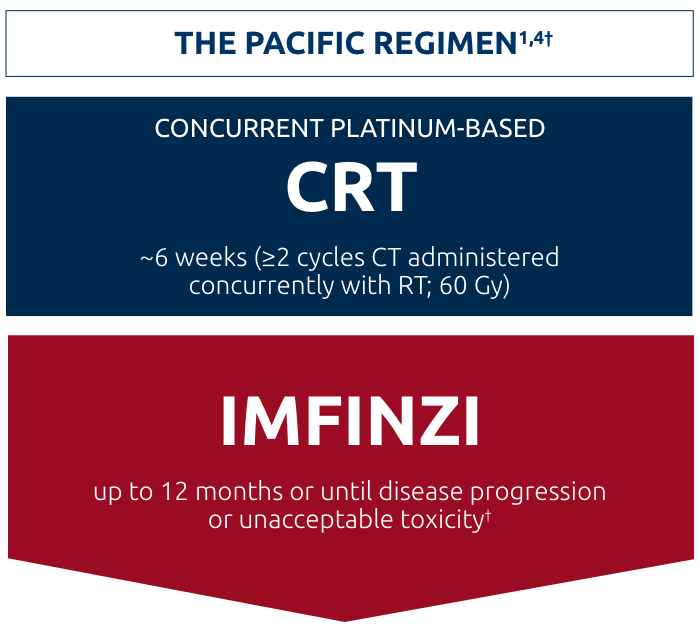
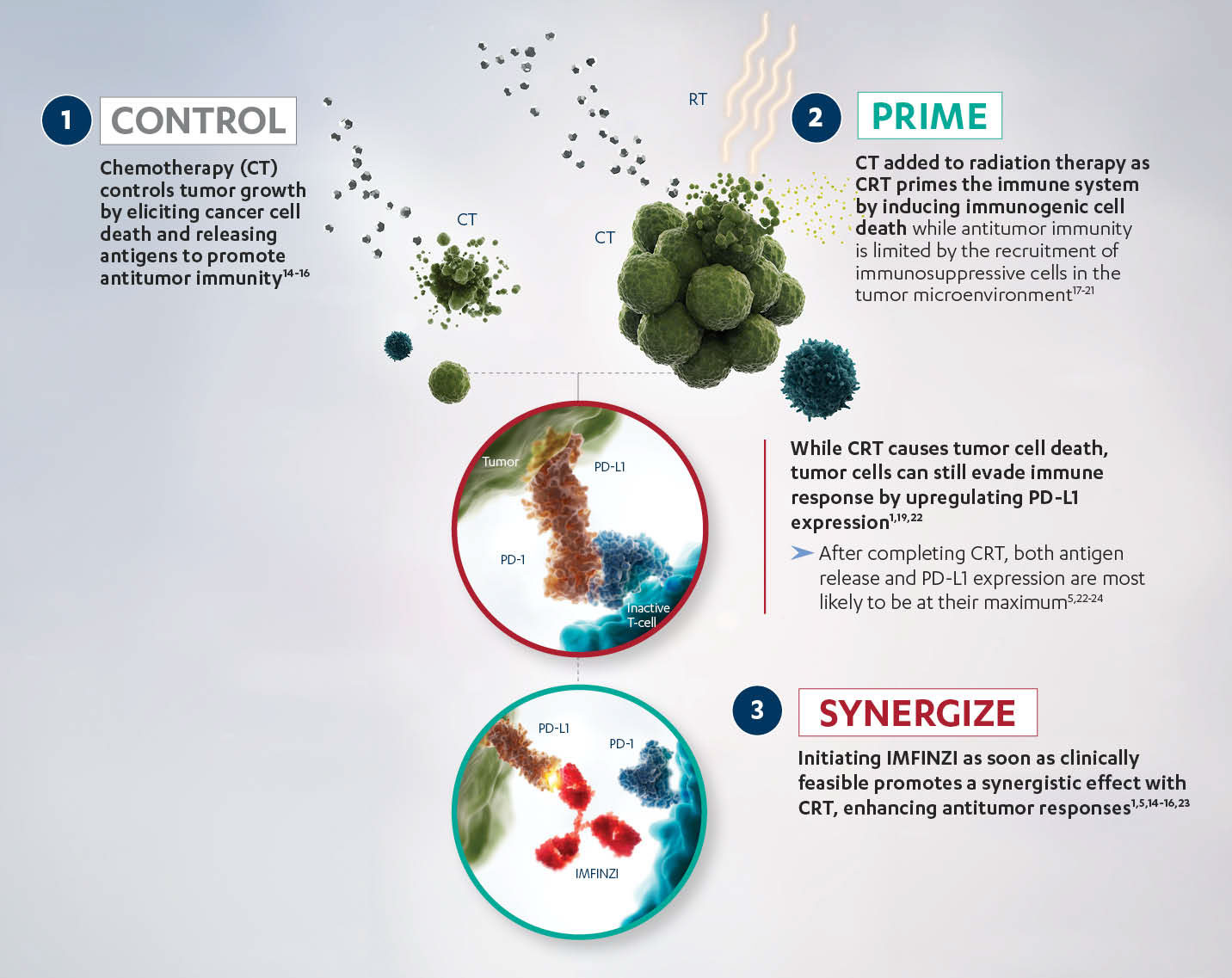
Initiate IMFINZI as clinically appropriate after cCRT, and treat for up to 12 months until disease progression or unacceptable toxicity1
In PACIFIC, scans were performed following cCRT within 0 to 42 days to assess disease progression5§
- Preferred method of assessment of target lesions was computed tomography or MRI (to be used where computed tomography is not feasible)5||
- Sites were encouraged to perform computed tomography/MRI within 14 days post-CRT and within 28 days prior to starting IMFINZI5
- Patients had to complete their last dose of radiation therapy within 1 to 42 days prior to receiving IMFINZI5||
- Initiating IMFINZI was allowed to be delayed by up to 42 days from the end of CRT for patients who are recovering from toxicities associated with prior treatment5
IMFINZI was initiated within 42 days following cCRT,1 and patients were randomized to receive IMFINZI if they had
- No evidence of disease progression5§
- Sites were encouraged to perform computed tomography/MRI within 14 days post-CRT5
- CRT ARs Grade ≤2 except for pneumonitis5
- Residual Grade ≤2 CRT ARs or Grade ≤1 CRT-induced pneumonitis5¶
Initiate IMFINZI as soon as clinically possible after the completion of cCRT5
Study design: The PACIFIC study was a large, Phase III, randomized, double-blind, placebo-controlled, international study of 713 patients with unresectable Stage III NSCLC who had not progressed following concurrent, platinum-based CRT. Patients had completed at least 2 cycles of concurrent CRT within 42 days prior to initiation of the study drug and had a WHO performance status of 0 or 1. Randomization at enrollment was stratified according to age, sex, and smoking history. Patients were randomized 2:1 to receive 10 mg/kg of IMFINZI or placebo every 2 weeks for up to 12 months or until unacceptable toxicity or confirmed disease progression. Coprimary endpoints were PFS (measured based on RECIST v1.1 criteria by BICR) and OS. Secondary endpoints included: Percentage of patients alive without disease progression at 12 and 18 months, ORR, DoR, and TTDM.1,5
*NCCN makes no warranties of any kind whatsoever regarding their content, use or application and disclaims any responsibility for their application or use in any way.
†In patients with unresectable Stage III NSCLC whose disease has not progressed following concurrent platinum-based chemoradiotherapy.1
‡Refer to Prescribing Information for information on dosage modifications.
§According to RECIST v1.1, patients have stable disease as long as target lesions only grow by <20% and no new lesions develop. Progression is defined as ≥20% increase in the sum of diameters of target lesions, taking as reference the smallest sum on study or the appearance of 1 or more new lesions.6
||The preferred method of assessment in PACIFIC for all lesions was computed tomography. Non-target lesions were also assessed by: MRI, clinical examination, or x-ray/chest x-ray. New lesions were also assessed by: MRI, clinical examination, x-ray/chest x-ray, ultrasound, and bone scan.5
¶Initially, patients with Grade 1 CRT-induced pneumonitis were excluded from the study.5
ARs=adverse reactions; BICR=blinded independent central review; cCRT=concurrent chemoradiotherapy; CRT=chemoradiotherapy; CT=chemotherapy; DoR=duration of response; Gy=gray; MRI=magnetic resonance imaging; NCCN=National Comprehensive Cancer Network® (NCCN®); NSCLC=non-small cell lung cancer; ORR=objective response rate; OS=overall survival; PFS=progression-free survival; RECIST=Response Evaluation Criteria in Solid Tumors; RT=radiotherapy; TTDM=time to death or distant metastasis; WHO=World Health Organization.




 This product information is intended for US Healthcare Professionals only.