Dr Sepesi:
Hi, I'm Doctor Boris Sepesi. I'm a thoracic surgeon at Sarah Cannon Cancer Network, HCA HealthONE in Englewood, Colorado.
Dr Sepesi:
Despite our best efforts at achieving R0 resections, only about a third of patients with Stage III non-small cell lung cancer are alive at 5 years.
Dr Sepesi:
Perioperative immunotherapy regimens have recently been approved for the treatment of early-stage non-small cell lung cancer. I have a close working relationship with the medical oncologists in my community, so it’s made it easier to collaborate to ensure appropriate patients receive treatment with perioperative regimens such as the AEGEAN Regimen with IMFINZI.
Dr Sepesi:
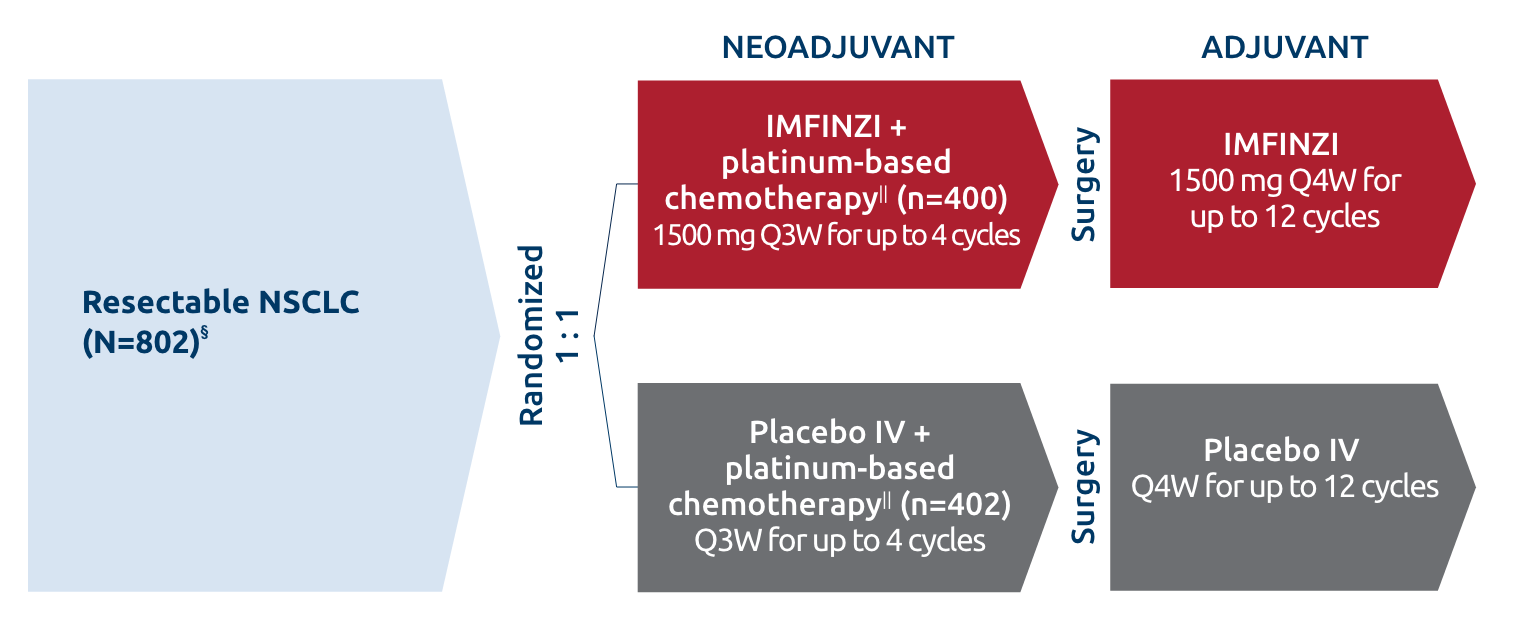
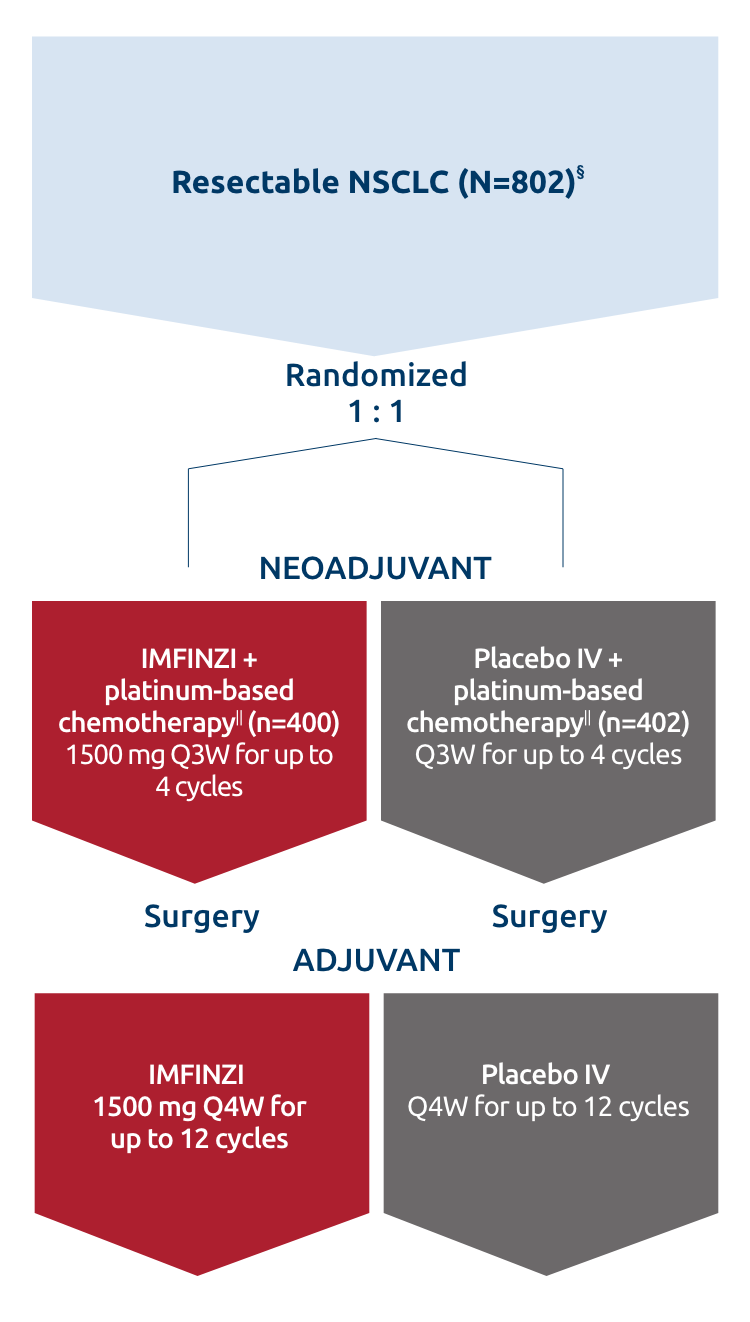
As we know, AEGEAN was a perioperative immunotherapy trial in Stage IIA to IIIB (N2) resectable non-small cell lung cancer with neoadjuvant IMFINZI plus choice of platinum-based chemotherapy followed by adjuvant IMFINZI. The protocol was amended while enrollment was ongoing to exclude patients with documented EGFR or ALK alterations, T4 invasion/
satellite tumors, and planned pneumonectomies.
Dr Sepesi:
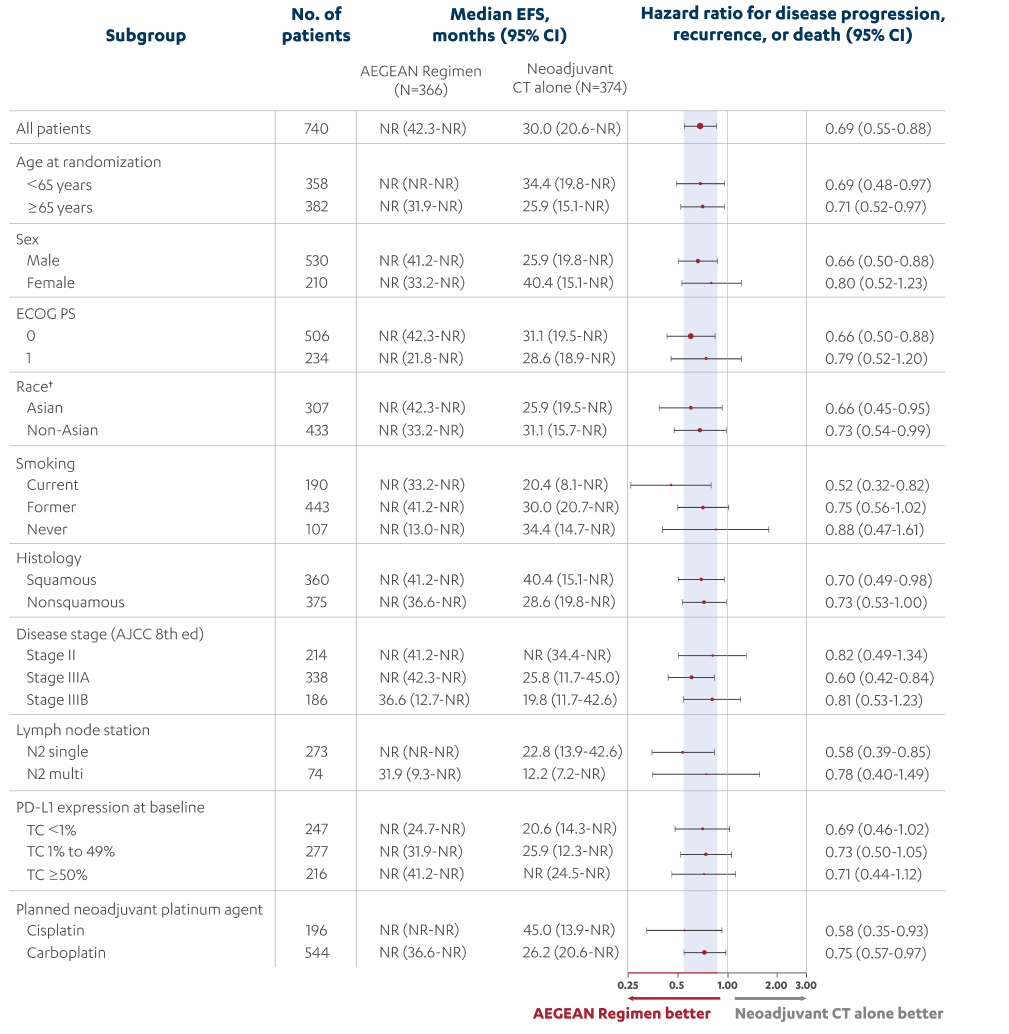
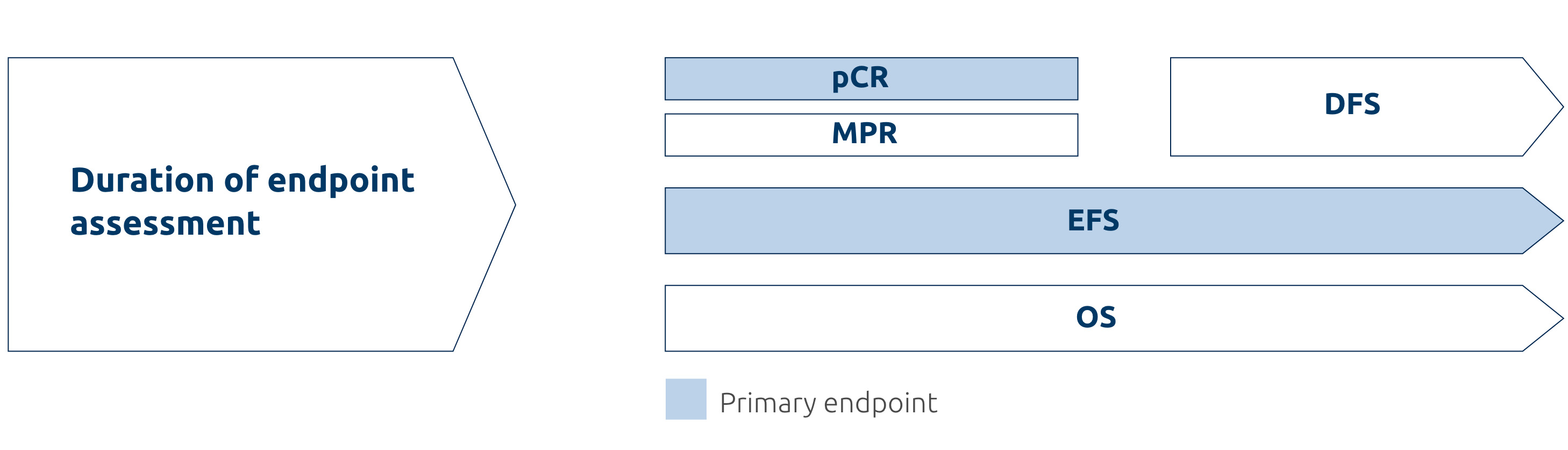
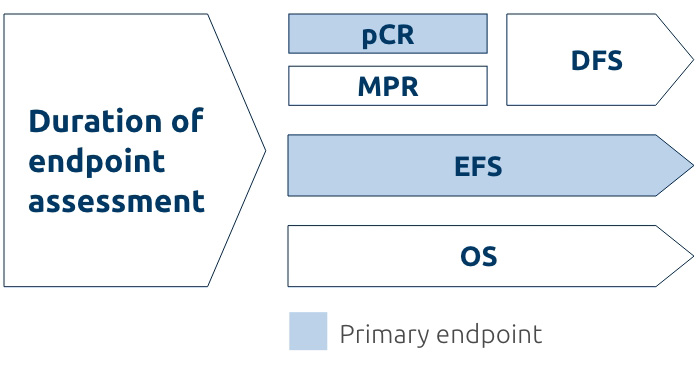
The co-primary efficacy end points were EFS and pCR. All efficacy analyses were performed on the modified intent-to-treat population. The trial showed improvements with perioperative IMFINZI-based treatment versus neoadjuvant chemotherapy alone in EFS and pCR.
Dr Sepesi:
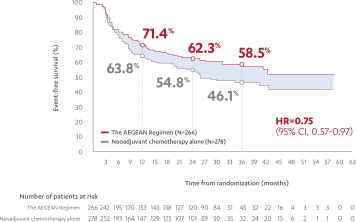
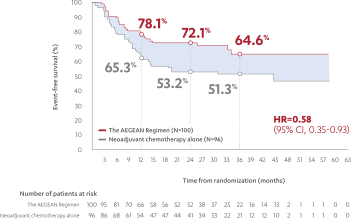
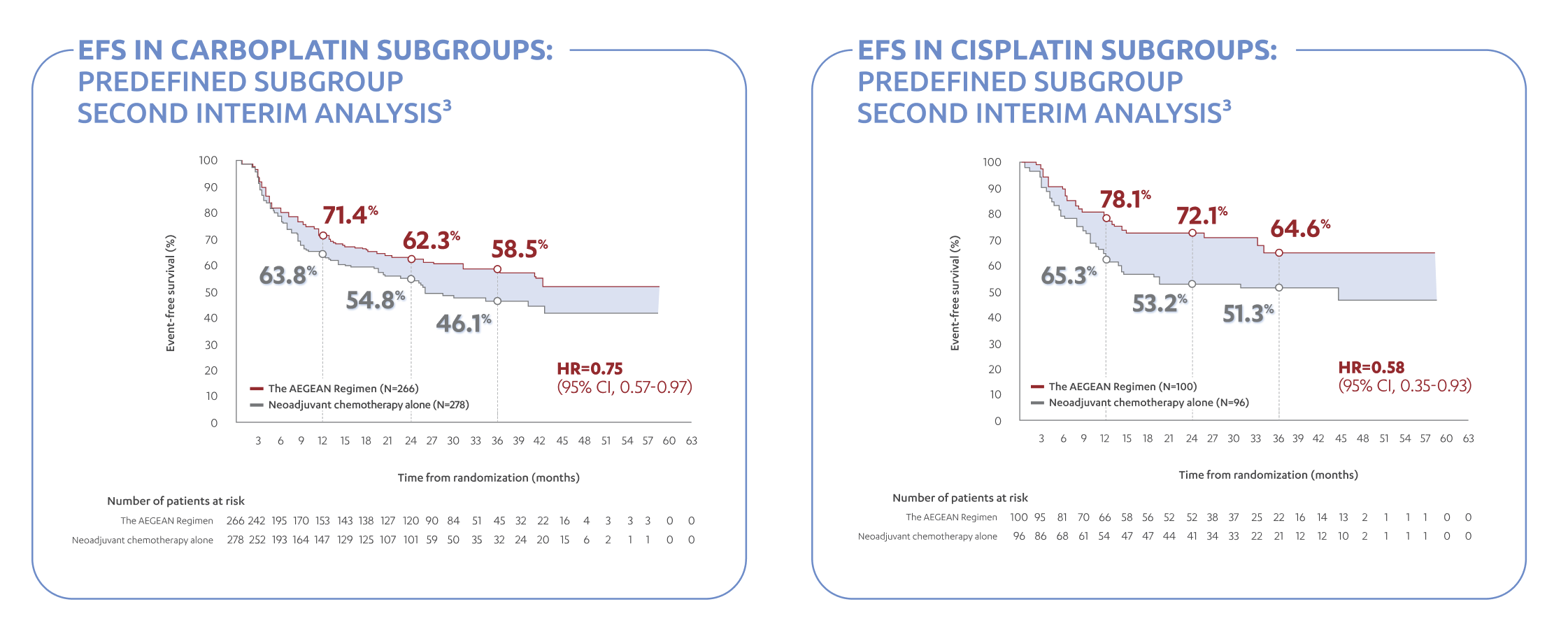
In the first interim analysis, medium EFS was not reached in patients treated with the AEGEAN Regimen and was 25.9 months in patients treated with neoadjuvant chemotherapy alone, with hazard ratio of 0.68.
Dr Sepesi:
There was a demonstrated safety profile with perioperative IMFINZI-based treatment. The most common adverse reactions occurring in 20% or more of patients were anemia, nausea, constipation, fatigue, musculoskeletal pain, and rash. The incidence of treatment-related maximum Grade 3 or 4 adverse reactions was 32.4% in patients receiving the AEGEAN Regimen and 32.9% in patients receiving neoadjuvant chemotherapy alone.
Dr Sepesi:
Here is additional safety information.
Dr Sepesi:
Select laboratory abnormalities with 20% or more worsening from baseline in the AEGEAN study included the blood and chemistry changes as shown on the screen.
Dr Sepesi:
Here is additional safety information from the neoadjuvant phase of AEGEAN.
Dr Sepesi:
Of the 401 IMFINZI-treated patients and 398 placebo-treated patients who received neoadjuvant treatment, 1.7% (n=7) and 1% (n=4), respectively, did not receive surgery due to adverse reactions.
Dr Sepesi:
Of the 325 IMFINZI-treated patients who received surgery, 4% (n=15) experienced delay of surgery due to adverse reactions. Of the 326 placebo-treated patients who received surgery, 4% (n=16) experienced delay of surgery due to adverse reactions.
Dr Sepesi:
Let’s discuss surgical outcomes in the AEGEAN study.
Dr Sepesi:
It is important to note that treatment completion data and surgical outcome data were not tested for statistical significance. 81% of patients in both arms underwent surgery. R0 resection was achieved by 95% of patients receiving the AEGEAN Regimen who completed surgery and 91% of patients receiving neoadjuvant chemotherapy alone.
Dr Sepesi:
Within the AEGEAN modified intent-to-treat population, surgical delays occurred in 17% of patients receiving the AEGEAN Regimen and 22% of patients receiving neoadjuvant chemotherapy alone.
Dr Sepesi:
Additionally, about 19% of patients in both arms didn’t undergo surgery, with about half because of progression or death (9.3% and 8.3%, respectively).
Dr Sepesi:
Some other exploratory surgical outcomes presented at WCLC in 2023 included the following: approach and type of surgery by disease stage... resection status by disease stage... adverse events possibly related to surgery and surgical complications... and the most common adverse events possibly related to surgery.
Dr Sepesi:
Since the approval of the AEGEAN Regimen last year, I’ve had a number of patients started on IMFINZI plus chemotherapy before surgery, so I have some experience with the regimen. In my opinion, the flexibility to choose between platinum-based chemotherapy regimens can be helpful. Some patients have tolerability issues with cisplatin that might be avoided by using carboplatin instead.
Dr Sepesi:
Here are images of a patient on the AEGEAN Regimen: at diagnosis... and post surgery. My surgical experience aligns with results from the trial. In my practice, I haven’t noticed any significant surgical delays or experienced complications that I felt made my surgeries more difficult, although I’m prepared for any complications that might occur. Some surgeries might have been longer, but not significantly so.
Dr Sepesi:
Additionally, my R0 resection rate has been close to the 95% in the trial. In my opinion, it’s important to refer appropriate patients with resectable non-small cell lung cancer to medical oncologists for consideration of perioperative IO treatment.
Dr Sepesi:
Be sure to “like” the video and subscribe to this channel for more expert insights. Please stay tuned for the Important Safety Information for IMFINZI.
[Important Safety Information is read aloud as it appears on screen.]

 HOME
HOME



 This product information is intended for US Healthcare Professionals only.